Experience the Majesty of the Eastern Himalayas with Frontpoint Adventures.
The Himalayas are home to countless trekking routes, but only a handful leave a lasting impression that stays with you long after you've returned home. The Goechala Trek, tucked away in the pristine landscapes of West Sikkim, is one such adventure. Renowned for its dramatic mountain scenery, untouched forests, alpine meadows, and breathtaking views of Mt. Kanchenjunga, this trek offers far more than just a destination—it offers an unforgettable journey. Unlike many Himalayan treks where the landscape changes gradually, Goechala surprises trekkers every single day. One morning you're walking beneath towering oak and rhododendron forests, the next you're crossing crystal-clear rivers, and before long you're standing amidst vast alpine valleys with towering Himalayan peaks surrounding you. At Frontpoint Adventures, we believe the true beauty of Goechala lies not only at the famous View Point 1 but throughout the entire trail. Every campsite, every bridge, every forest trail, and every sunrise contribute to making this trek one of India's finest high-altitude experiences. This guide walks you through the highlights of the trek day by day, helping you understand why Goecha la deserves a place on every mountain lover's bucket list.
Day 1 – Journey to Yuksom: The Gateway to Kanchenjunga
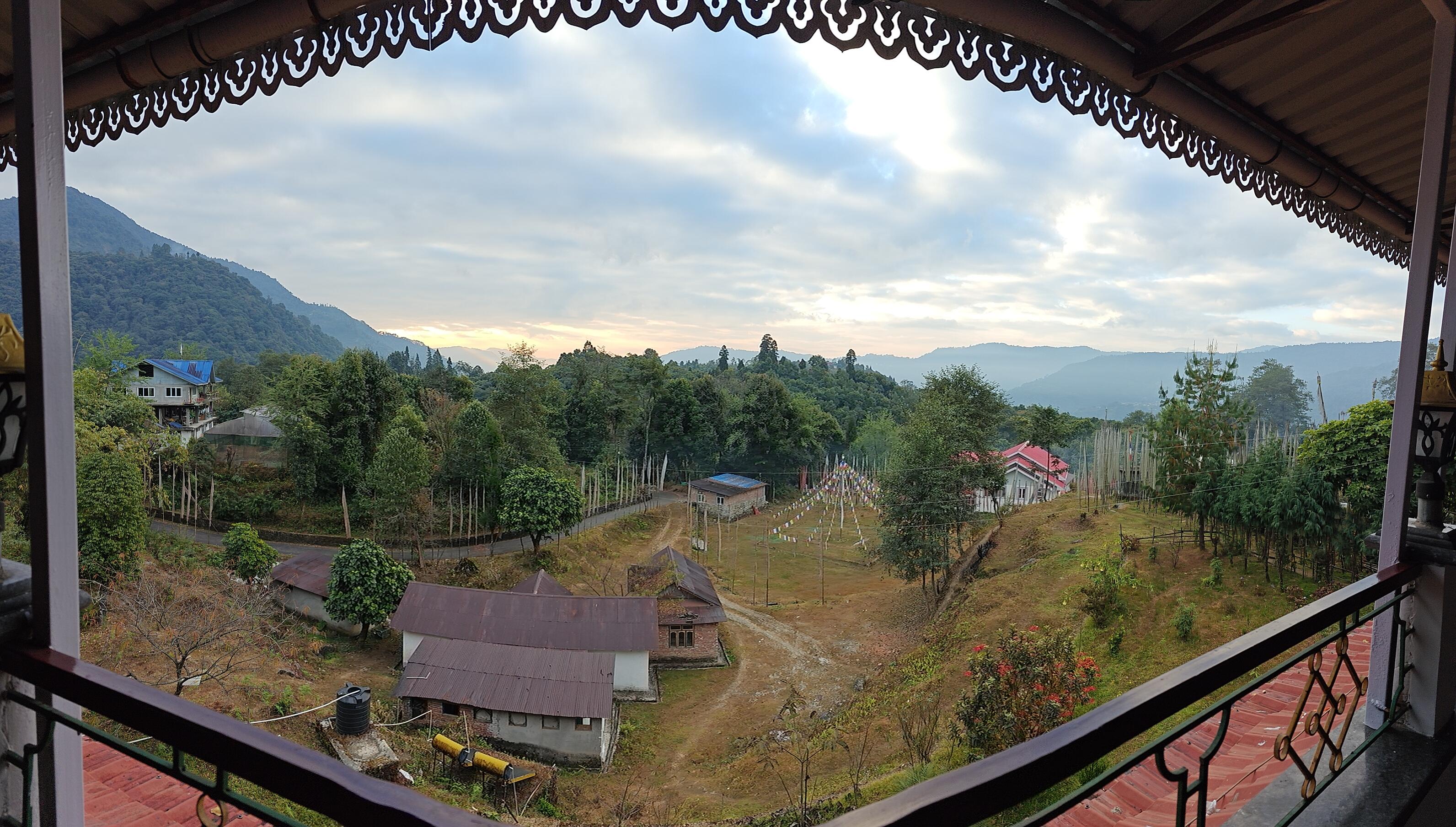
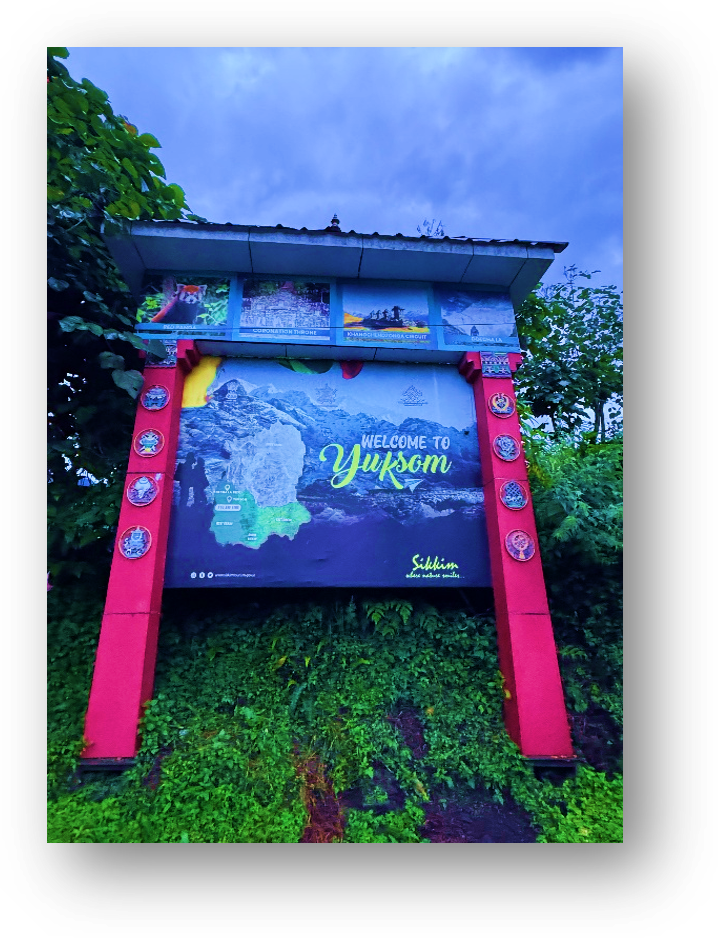
Your adventure begins with a scenic drive from Siliguri or New Jalpaiguri (NJP) to the peaceful mountain village of Yuksom, situated at approximately 1,780 metres (5,840 ft). The drive itself is an introduction to Sikkim's incredible landscapes. As the roads climb higher, bustling towns slowly disappear and are replaced by lush forests, winding mountain roads, waterfalls, and charming villages. The Teesta and Rangeet rivers accompany you for much of the journey, adding spectacular views along the route. Yuksom is much more than a trekking basecamp. Historically, it was the first capital of the Kingdom of Sikkim and still retains a peaceful atmosphere rooted in Buddhist culture and tradition. Colourful prayer flags flutter in the breeze, ancient monasteries overlook the valley, and local cafés provide a warm welcome before the trek begins. After reaching Yuksom, trekkers complete permit formalities, meet the expedition team, inspect equipment, and receive a detailed briefing about the upcoming journey. Spending a relaxed evening here also helps your body begin adjusting to the increasing altitude. What Makes Day 1 Special? • Scenic Himalayan drive through Sikkim • Historic town with rich cultural heritage • Comfortable introduction to mountain life • Opportunity to meet fellow trekkers and guides • Preparation for the days ahead Frontpoint Adventures Tip: Use the evening to organize your backpack carefully. Carry only essential items in your daypack, and ensure your headlamp, rain jacket, and water bottles are easily accessible for the coming days.
Day 2 – Into the Forests: Yuksom to Sachen Altitude: 1,780 m to 2,200 m Distance: Approximately 8 km Duration: 5–6 Hours
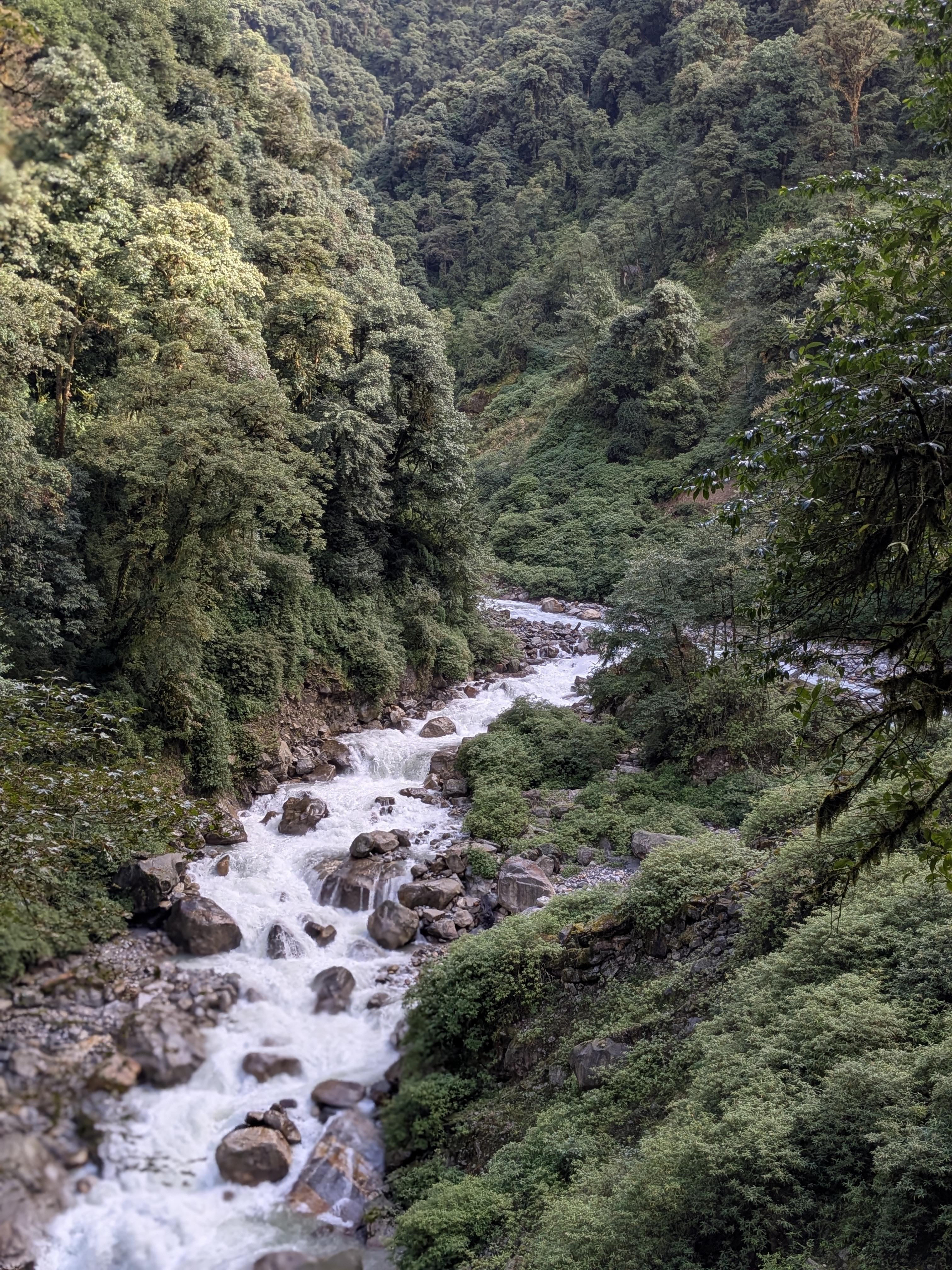
The first trekking day introduces you to one of Goecha la's most remarkable features—its dense Himalayan forests. Unlike many trekking routes where vegetation quickly fades away, Goecha la remains covered with thick forests for several days. The trail enters the protected region of Kanchenjunga National Park, a UNESCO World Heritage Site famous for its incredible biodiversity. Towering oak, maple, chestnut, magnolia, bamboo, and rhododendron trees form a lush green canopy overhead. During spring, these forests burst into shades of red, pink, and white as thousands of rhododendrons bloom simultaneously, creating one of the most colourful trekking landscapes in India. As you progress deeper into the forest, the sounds of civilization disappear. Instead, you'll hear birdsong, flowing streams, rustling leaves, and the distant roar of the Prek Chu River below.
The Suspension Bridges
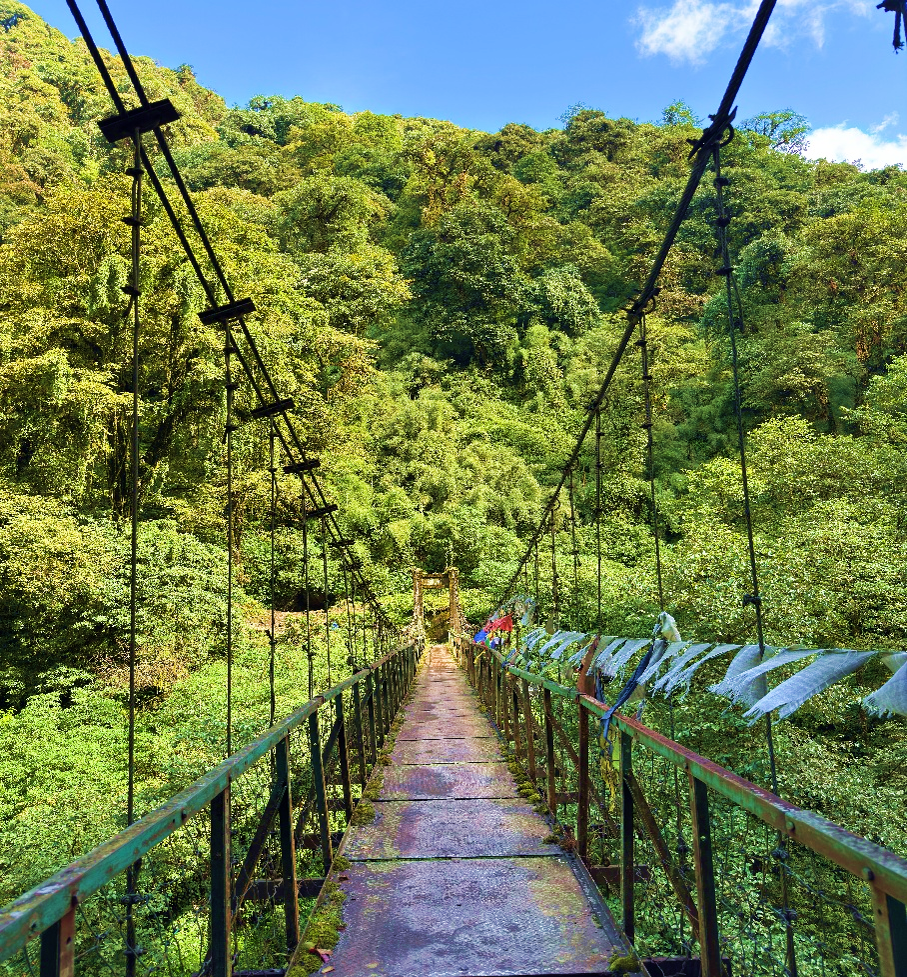
One of the most exciting parts of today's trek is crossing several suspension bridges that stretch high above deep river gorges. Decorated with colourful Buddhist prayer flags, these bridges gently sway beneath your feet while offering dramatic views of the rushing river below. Every crossing becomes an excellent photography opportunity and reminds trekkers that they are entering one of the wildest corners of the Eastern Himalayas. Each bridge marks a gradual gain in elevation as the trail winds through dense woodland and rocky terrain.
Waterfalls Along the Trail
Small waterfalls appear unexpectedly throughout today's hike. Crystal-clear streams tumble down moss-covered rocks before joining the Prek Chu River deep inside the valley. These natural water sources create refreshing rest points where trekkers can pause, refill bottles (after purification), and simply enjoy the peaceful surroundings. The combination of waterfalls, wooden bridges, towering trees, and cool mountain air makes this section one of the most enjoyable forest walks in the Himalayas.
Wildlife and Biodiversity
The forests around Yuksom are among the richest ecosystems in the Eastern Himalayas. Although wildlife usually remains hidden, patient trekkers may spot: • Himalayan Monal • Blood Pheasant • Yellow-billed Blue Magpie • Himalayan Langur • Red Panda (extremely rare) • Musk Deer • Various species of butterflies and orchids Every season brings a different character to these forests, making Goecha la rewarding throughout the trekking year.
Arrival at Sachen
By late afternoon, the forest opens into a peaceful clearing known as Sachen, your first campsite. Surrounded by towering trees and hidden deep inside the valley, Sachen offers a completely different atmosphere compared to crowded trekking camps elsewhere in the Himalayas. As evening falls, mist slowly drifts through the forest while the distant sound of the Prek Chu River creates a soothing backdrop. It is the perfect place to enjoy a hot cup of tea, interact with fellow trekkers, and prepare for the journey ahead. With no city lights nearby, clear nights often reveal thousands of stars shining above the forest canopy.
Frontpoint Adventures Expert Advice
The first day may appear easy, but it sets the pace for the rest of the expedition. To ensure a comfortable trek: • Walk slowly and maintain a steady rhythm. • Stay hydrated throughout the day. • Avoid rushing on uphill sections. • Use trekking poles to reduce strain on your knees. • Wear layered clothing instead of heavy jackets while walking. • Respect the forest ecosystem by carrying back all waste. Building good trekking habits from Day 2 makes the higher-altitude sections significantly more enjoyable.
Why This Day Is Memorable
The trek from Yuksom to Sachen isn't about conquering altitude—it's about immersing yourself in nature. Ancient forests, colorful prayer flags, hanging bridges, hidden waterfalls, and the calming sounds of the wilderness create an unforgettable introduction to one of India's greatest Himalayan adventures. Whether you're an experienced trekker or embarking on your first multi-day expedition, this day perfectly captures the peaceful charm that makes Goecha la truly extraordinary.
Day 3 – Sachen to Tshoka: Into the Land of Rhododendrons Altitude: 2,200 m to 2,970 m Distance: Approx. 8 km Duration: 5–6 Hours
Your second trekking day begins with the soothing sound of birds echoing through the forest. As the morning sunlight filters through the dense canopy, the trail gradually climbs deeper into the Kanchenjunga National Park. Today's journey introduces steeper ascents, richer vegetation, and the first panoramic glimpses of the Himalayan landscape. While the distance isn't very long, the elevation gain makes this one of the first physically demanding days of the trek.
Crossing the Prek Chu Once Again
Shortly after leaving Sachen, the trail crosses another suspension bridge over the lively Prek Chu River. Looking down at the emerald-green water flowing through the rocky valley is a refreshing reminder of the untouched beauty surrounding you. Prayer flags flutter in the mountain breeze, carrying blessings across the valley—a common sight throughout Sikkim and an important part of the region's Buddhist culture.
A Continuous Forest Ascent
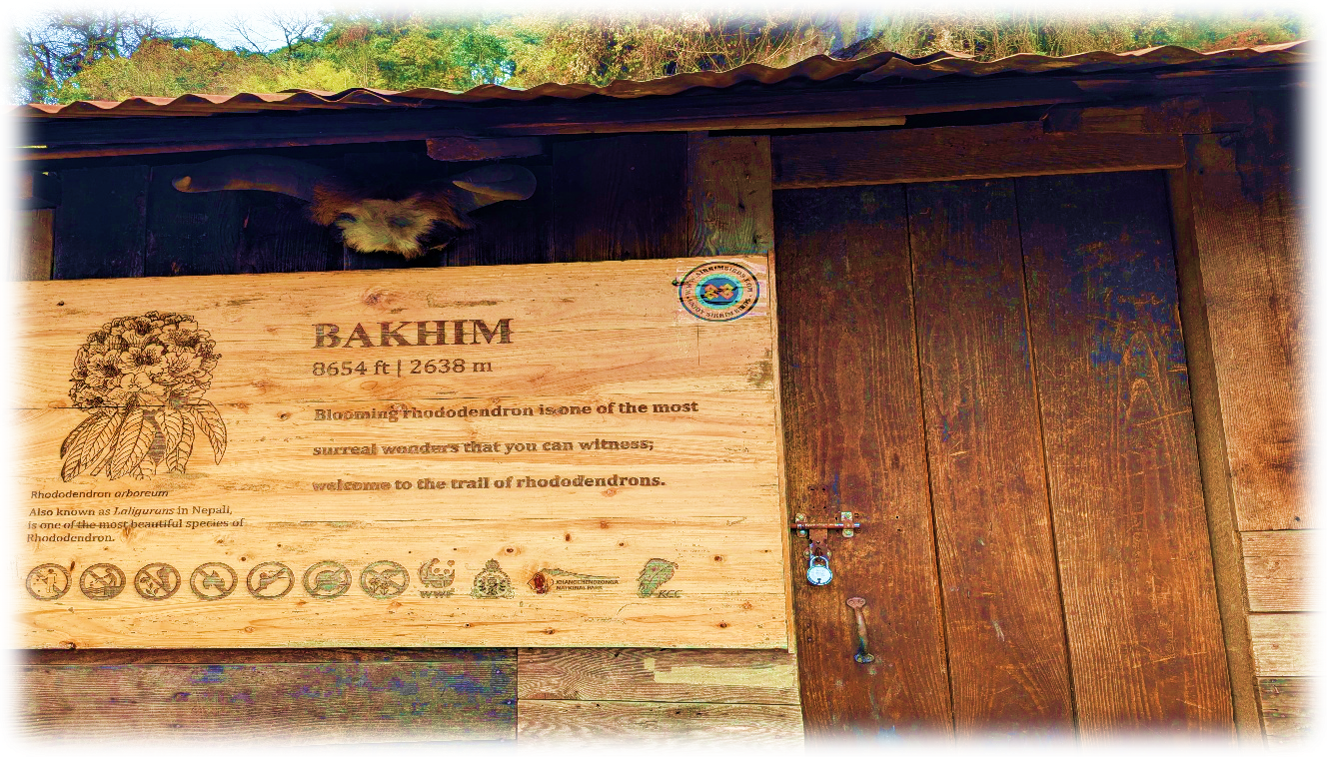
The trail now winds steadily uphill beneath towering oak, fir, pine, and rhododendron trees. Unlike many Himalayan treks where the landscape quickly becomes barren, Goecha la remains surrounded by thick forests for several days. This dense vegetation not only provides shade but also creates a cool, refreshing atmosphere even during warmer months. Every few kilometres, the forest changes subtly. Giant moss-covered trees, colourful lichens, and ferns create an environment that almost feels prehistoric. Spring transforms these forests into one of India's largest natural rhododendron gardens. Thousands of flowers bloom together, painting entire hillsides in shades of crimson, pink, purple, and white. During autumn, golden sunlight filters through emerald-green forests, creating equally spectacular scenery.
Bakhim – A Scenic Rest Point
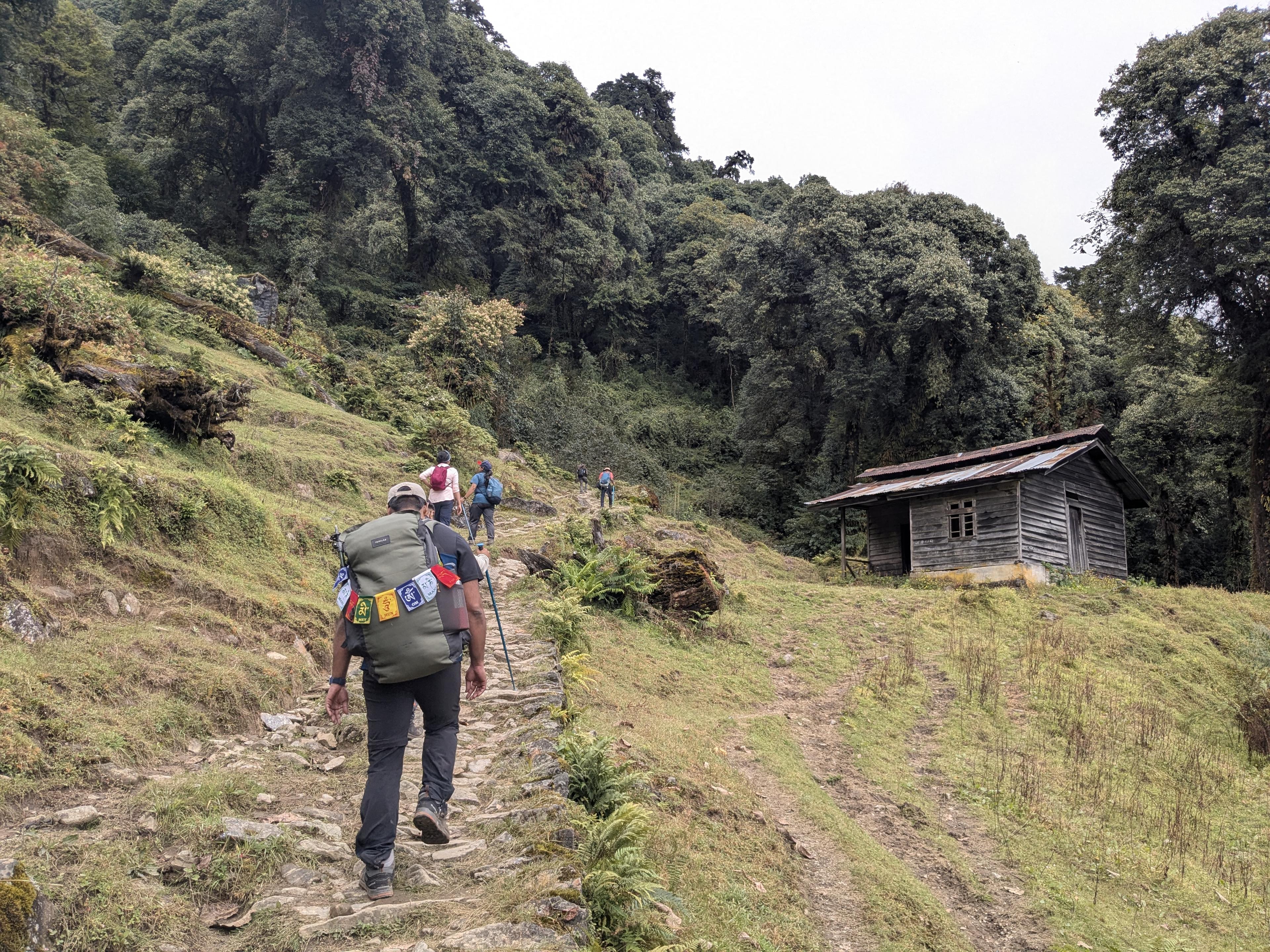
After several hours of climbing, trekkers arrive at Bakhim, a small resting point overlooking the valley below. This quiet stop offers the first clear views beyond the forest. Colorful rooftops, distant ridges, and the winding trekking trail become visible from here. Many trekkers enjoy taking a short break, sipping hot tea, and appreciating how far they have already climbed since leaving Yuksom.
Arrival at Tshoka
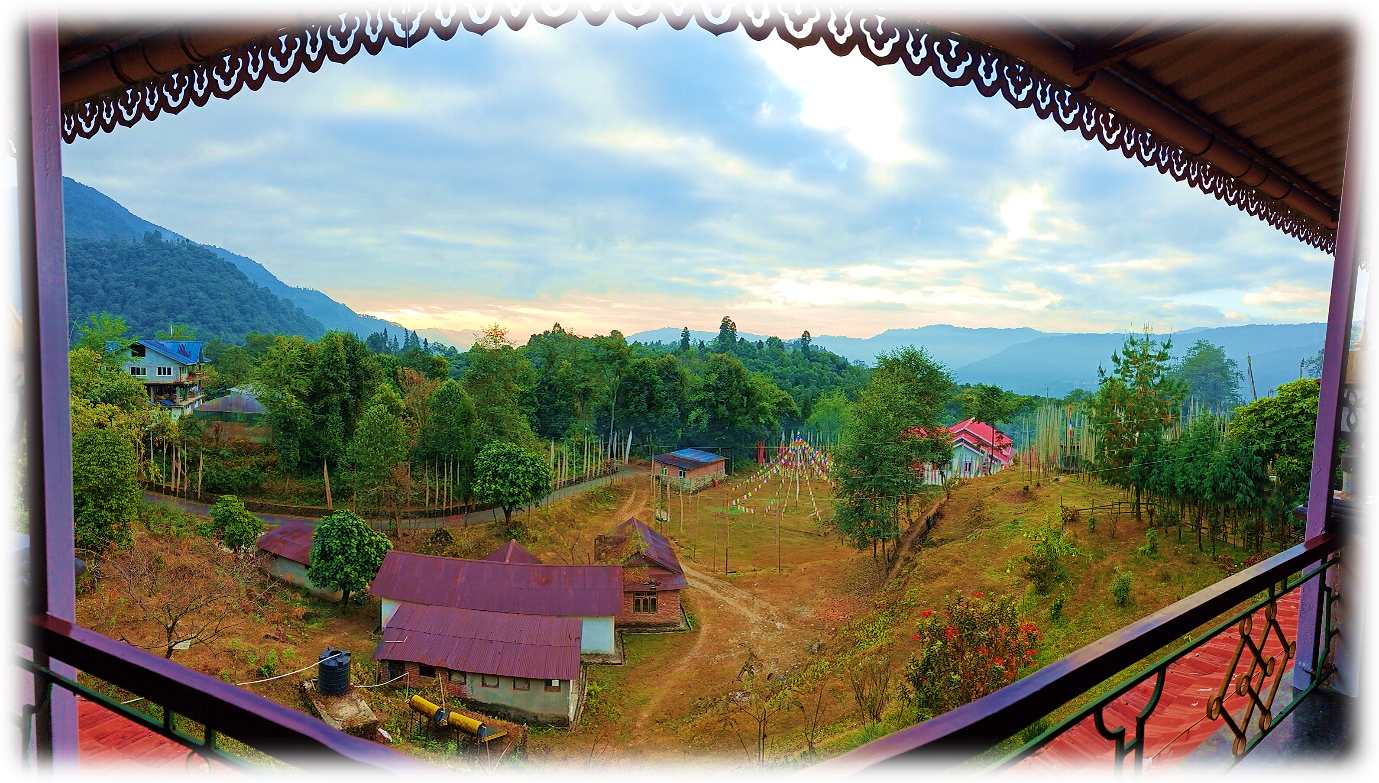
Continuing uphill, the trail eventually reaches Tshoka, one of the most charming settlements on the entire trek. Located at nearly 3,000 meters, Tshoka was once a small Tibetan refugee settlement and still reflects strong Himalayan Buddhist traditions. Unlike forest camps such as Sachen, Tshoka feels like a tiny mountain village. Wooden houses, colorful rooftops, grazing yaks, fluttering prayer flags, and traditional mountain architecture create a postcard-perfect setting. For many trekkers, this is the first campsite where the surrounding peaks begin to dominate the skyline.
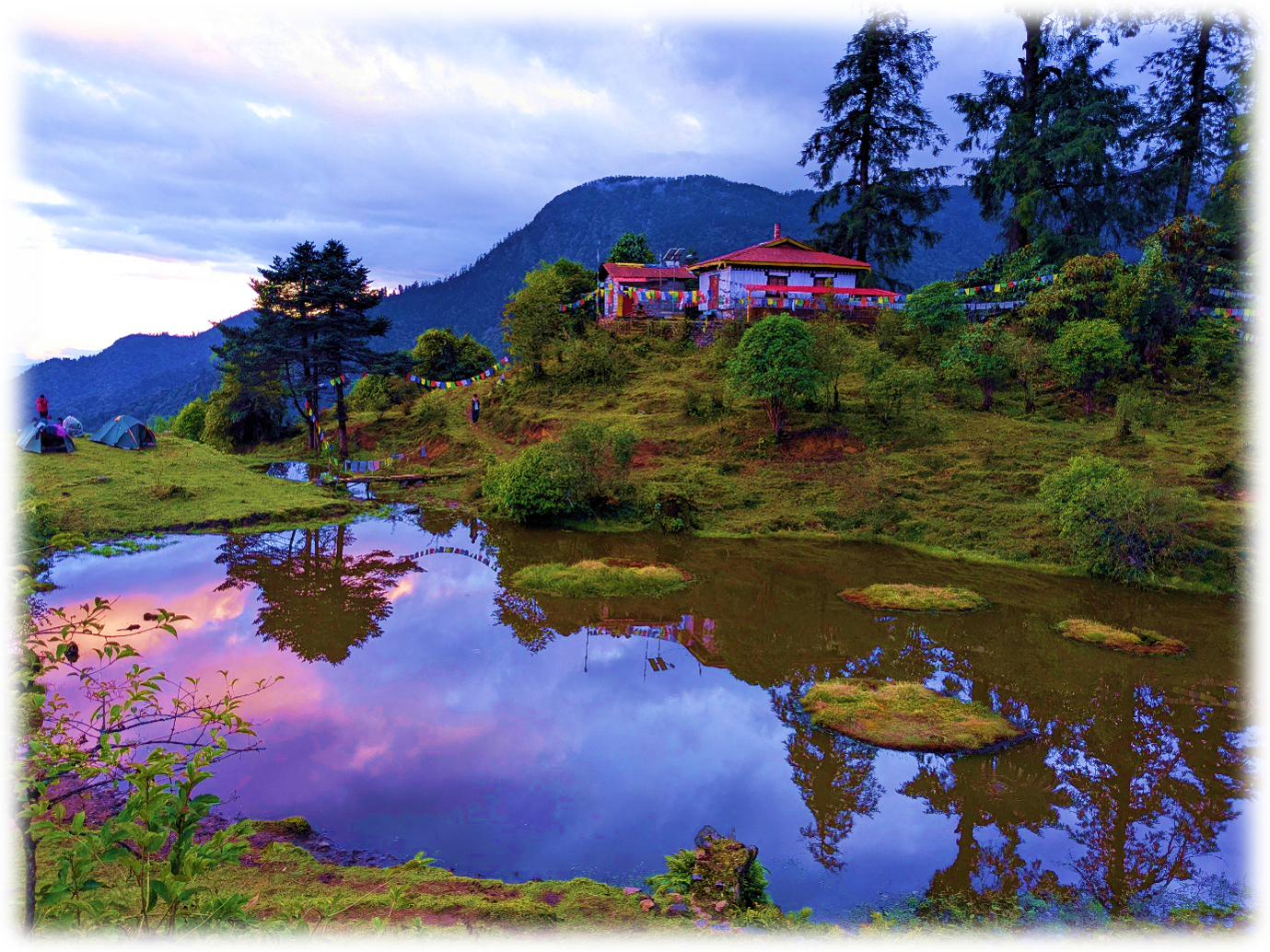
The Peaceful Monastery
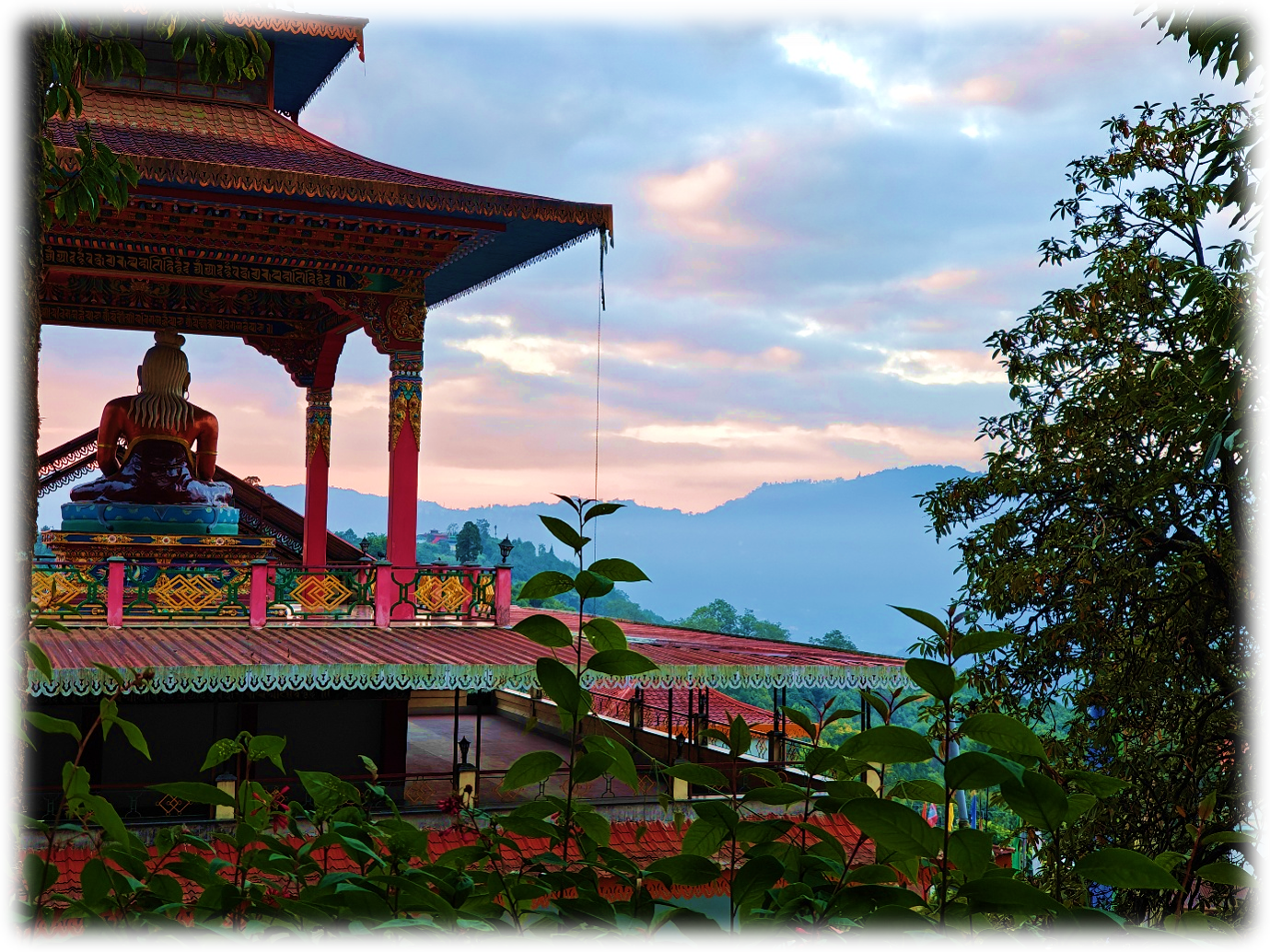
One of Tshoka's greatest attractions is its beautiful Buddhist monastery. A short uphill walk leads to this peaceful place of worship overlooking the valley. The monastery is surrounded by prayer flags that dance continuously in the mountain wind, creating an atmosphere of complete serenity. Inside, traditional paintings, prayer wheels, and ancient Buddhist symbols reflect the spiritual heritage of the region. Even visitors with no religious background often spend time here simply enjoying the silence and magnificent mountain surroundings.
The Reflective Pond
Just beside the monastery lies a small alpine pond. On calm days, its crystal-clear surface mirrors the colorful prayer flags and distant Himalayan peaks, creating one of the most photographed scenes along the Goechala trail. Early mornings and evenings provide especially magical reflections.
Evening at Tshoka
As temperatures begin to drop, clouds often drift slowly across the valley while the distant mountains glow under the evening light. The peaceful atmosphere makes Tshoka one of the most memorable overnight camps on the trek. Hot soup, freshly prepared dinner, and conversations with fellow trekkers complete another rewarding day in the mountains.
Frontpoint Adventures Tip
The altitude begins increasing noticeably from Tshoka onwards. To help your body acclimatise: • Drink at least 3–4 litres of water. • Avoid alcohol and smoking. • Eat well even if your appetite decreases. • Walk slowly instead of rushing uphill. • Inform your trek leader immediately if you experience headache or nausea. Proper acclimatisation today makes the higher camps much more comfortable.
Day 4 – Tshoka to Dzongri: Entering the Alpine Himalayas Altitude: 2,970 m to 4,020 m Distance: Approx. 10 km Duration: 7–8 Hours
Day four marks a dramatic transformation in the landscape. The dense forests slowly begin giving way to alpine terrain, wider mountain views, and thinner air. Although this is one of the toughest days physically, it is also among the most rewarding.
Walking Through Endless Rhododendron Forests
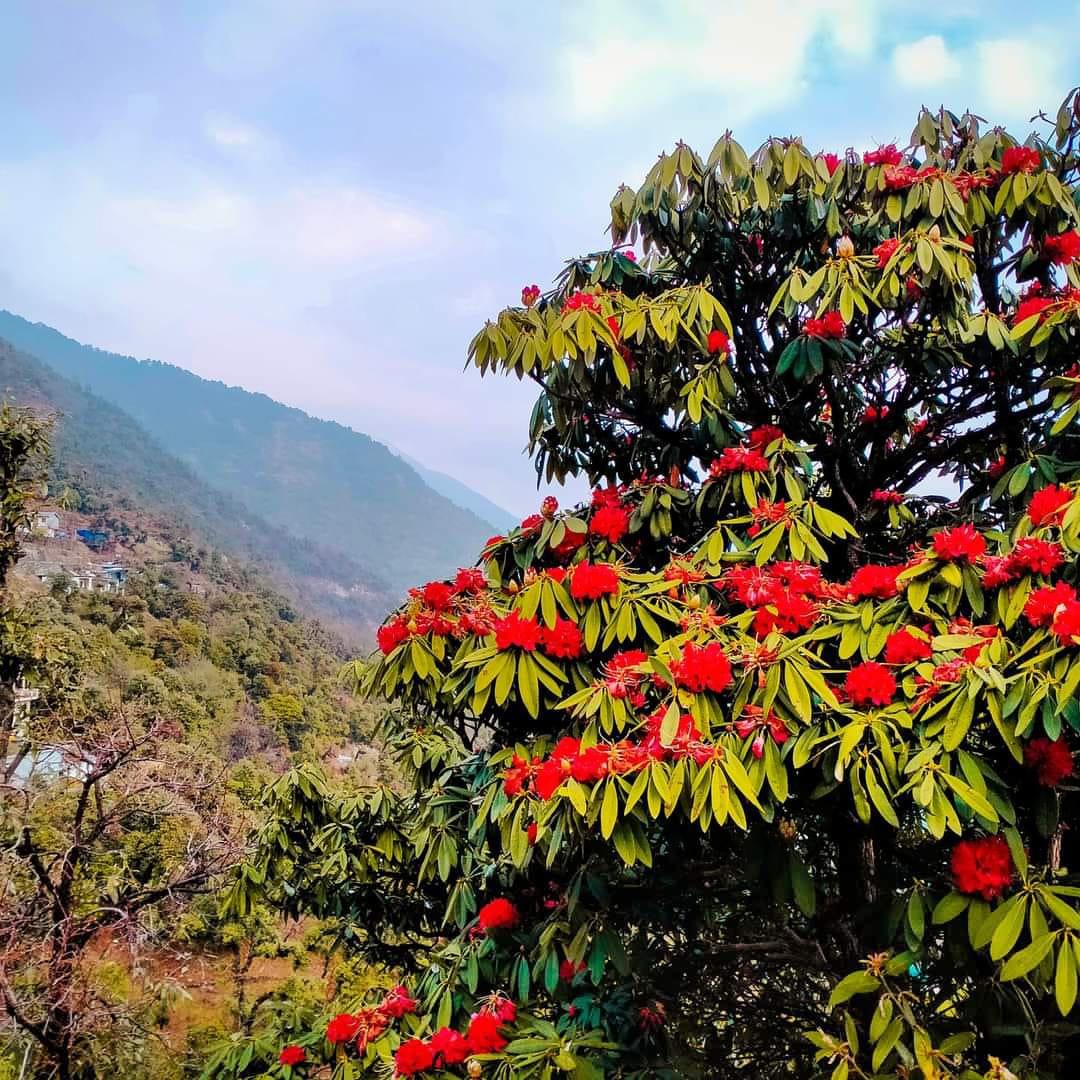
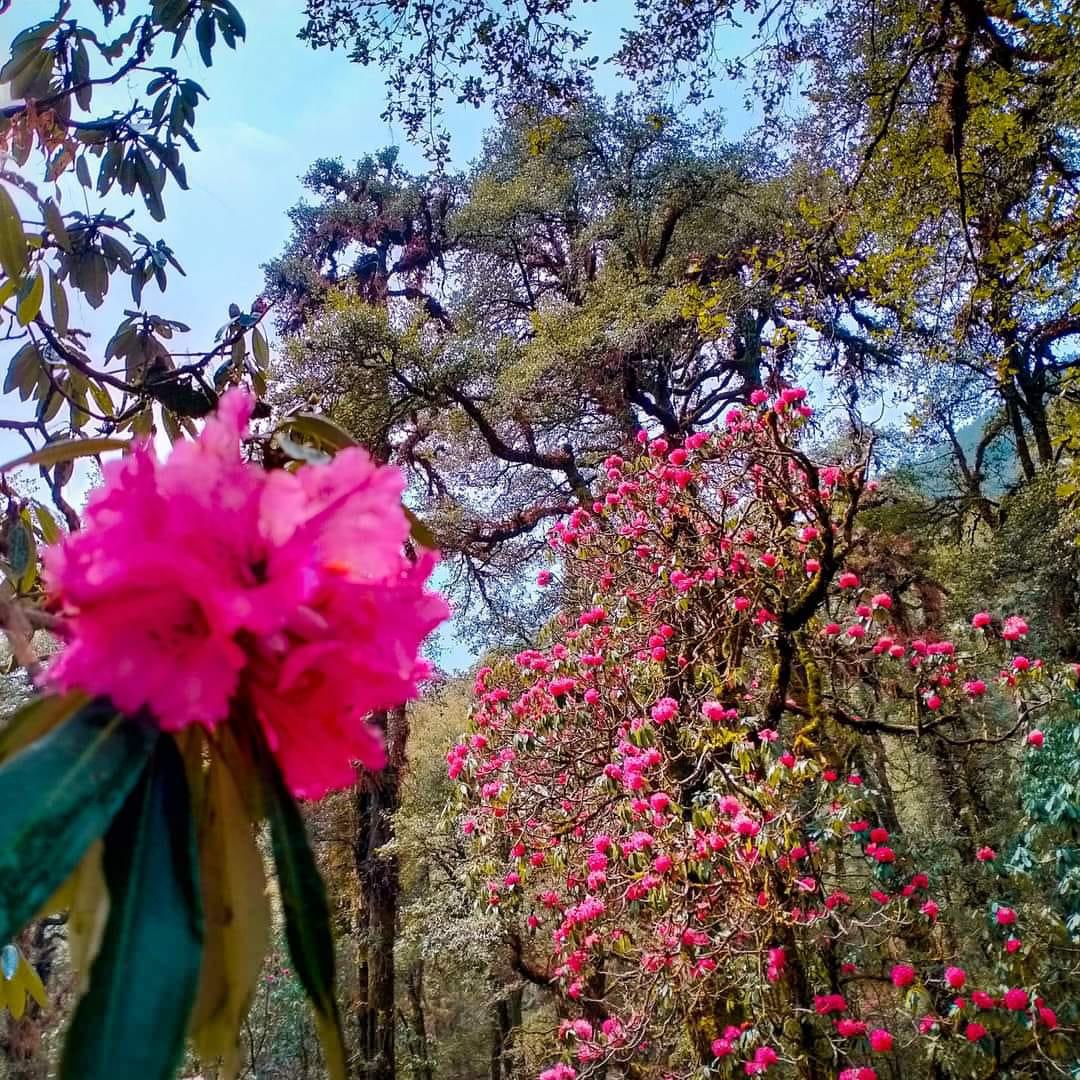
Soon after leaving Tshoka, the trail climbs through one of the largest rhododendron forests in the Eastern Himalayas. The pathway winds beneath enormous rhododendron trees whose twisted branches create a natural tunnel overhead. During spring, every branch bursts into colorful flowers, turning the entire forest into a living botanical garden. Mist frequently drifts through these forests, creating an enchanting atmosphere where every turn feels like stepping into another world.
Wooden Trails Across the Forest
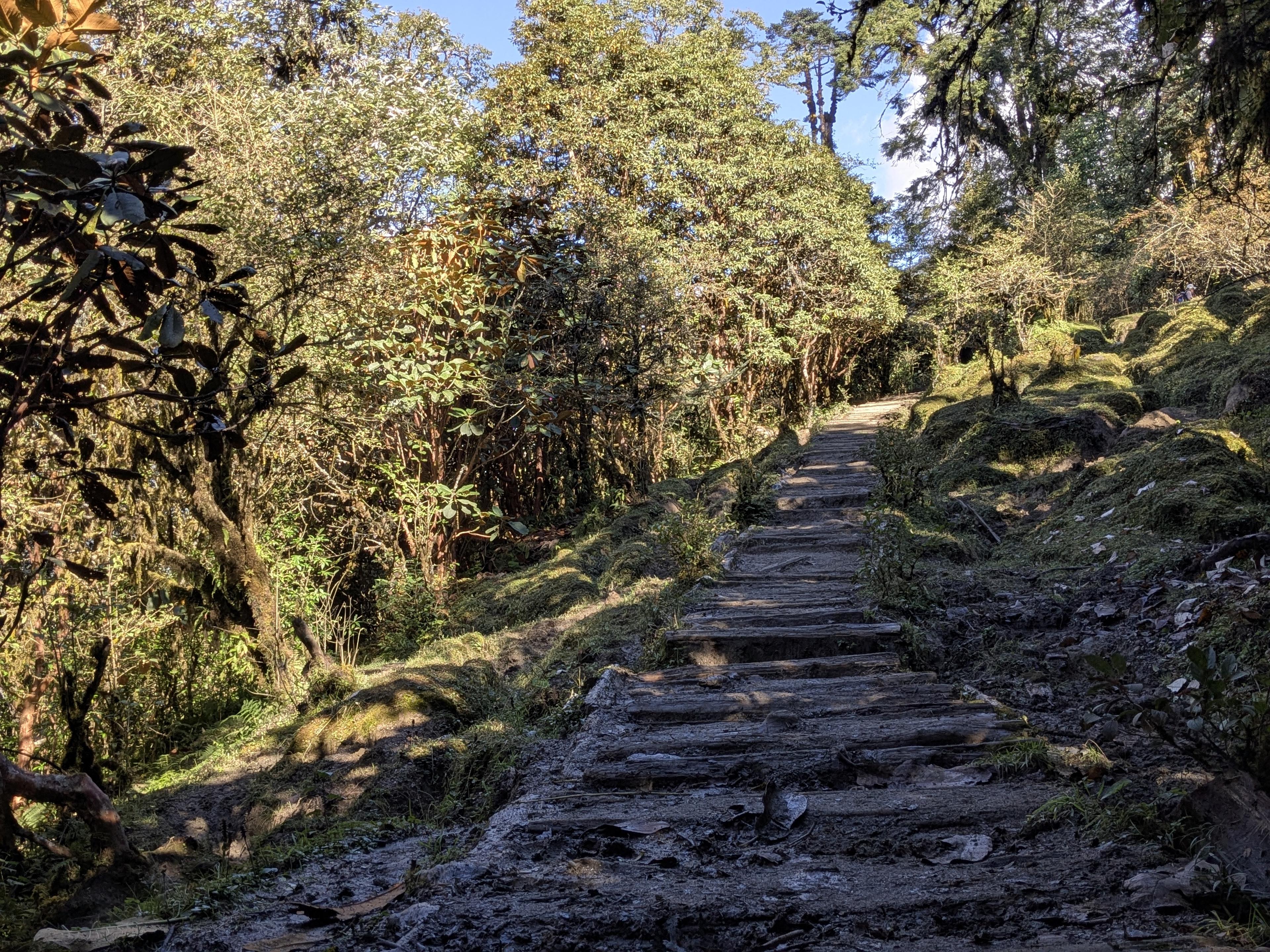
A unique feature of today's route is the series of wooden log pathways laid across muddy sections of the trail. These wooden sections blend naturally into the forest while making the ascent safer and more comfortable. Combined with the surrounding rhododendrons and occasional fog, they provide some of the most picturesque walking stretches anywhere in the Himalayas.
Phedang – Where the Forest Ends
Gradually, the thick forest begins disappearing. Trees become smaller. The sky opens dramatically. Suddenly, trekkers emerge into the open alpine meadows of Phedang. Located above 3,600 metres, Phedang offers magnificent panoramic views stretching across the surrounding mountain ranges. Small prayer flags flutter beside simple wooden shelters while snow-covered peaks begin appearing on the horizon. Many trekkers consider this the moment when they truly feel they have entered the high Himalayas.

Above the Tree Line
Leaving Phedang behind, the trail becomes steeper and more exposed. The landscape changes rapidly. Dense forests are replaced by alpine shrubs, rocky slopes, and vast mountain grasslands. The air becomes thinner, making slow, steady walking extremely important. Trekkers now begin experiencing the raw grandeur of the Eastern Himalayas. Every step reveals larger mountain panoramas than the last.

The Challenge of Altitude
Today's elevation gain exceeds 1,000 meters, making it one of the most demanding sections of the trek. Most trekkers notice that breathing becomes slower and more deliberate. Frequent short breaks, proper hydration, and maintaining a comfortable pace help your body adapt naturally. Experienced trek leaders continuously monitor everyone to ensure safe acclimatization.
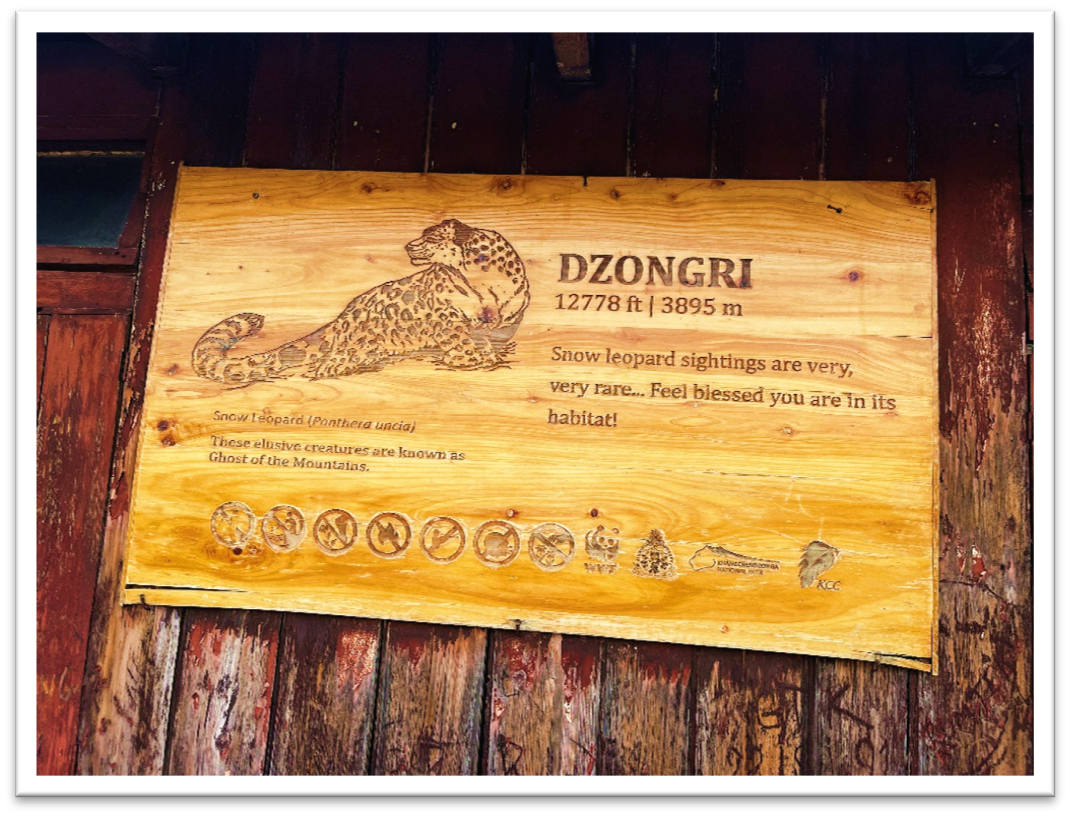
Arrival at Dzongri
Reaching Dzongri (4,020 m) feels like entering another world. The campsite is surrounded by enormous Himalayan peaks, rolling alpine meadows, and endless open skies. Clouds drift below the ridges while prayer flags flutter across the campsite. The sense of achievement after today's climb is immense.
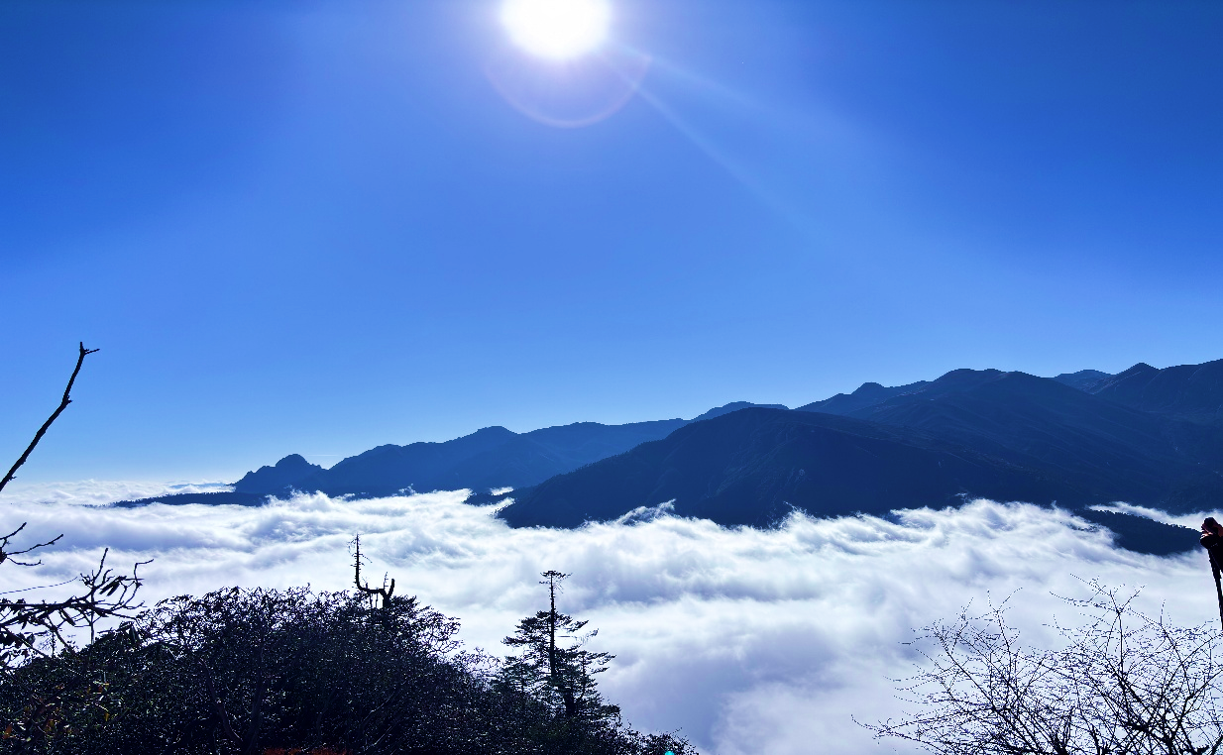
Sunset Over the Himalayas
If weather permits, the evening rewards trekkers with one of Goecha la's finest spectacles. As the sun slowly disappears behind the mountains, the surrounding peaks glow in brilliant shades of orange, gold, and crimson. The colors change almost every minute before fading into deep blue twilight. Unlike crowded viewpoints elsewhere, Dzongri offers a peaceful environment where trekkers can quietly absorb the grandeur of the Himalayas.
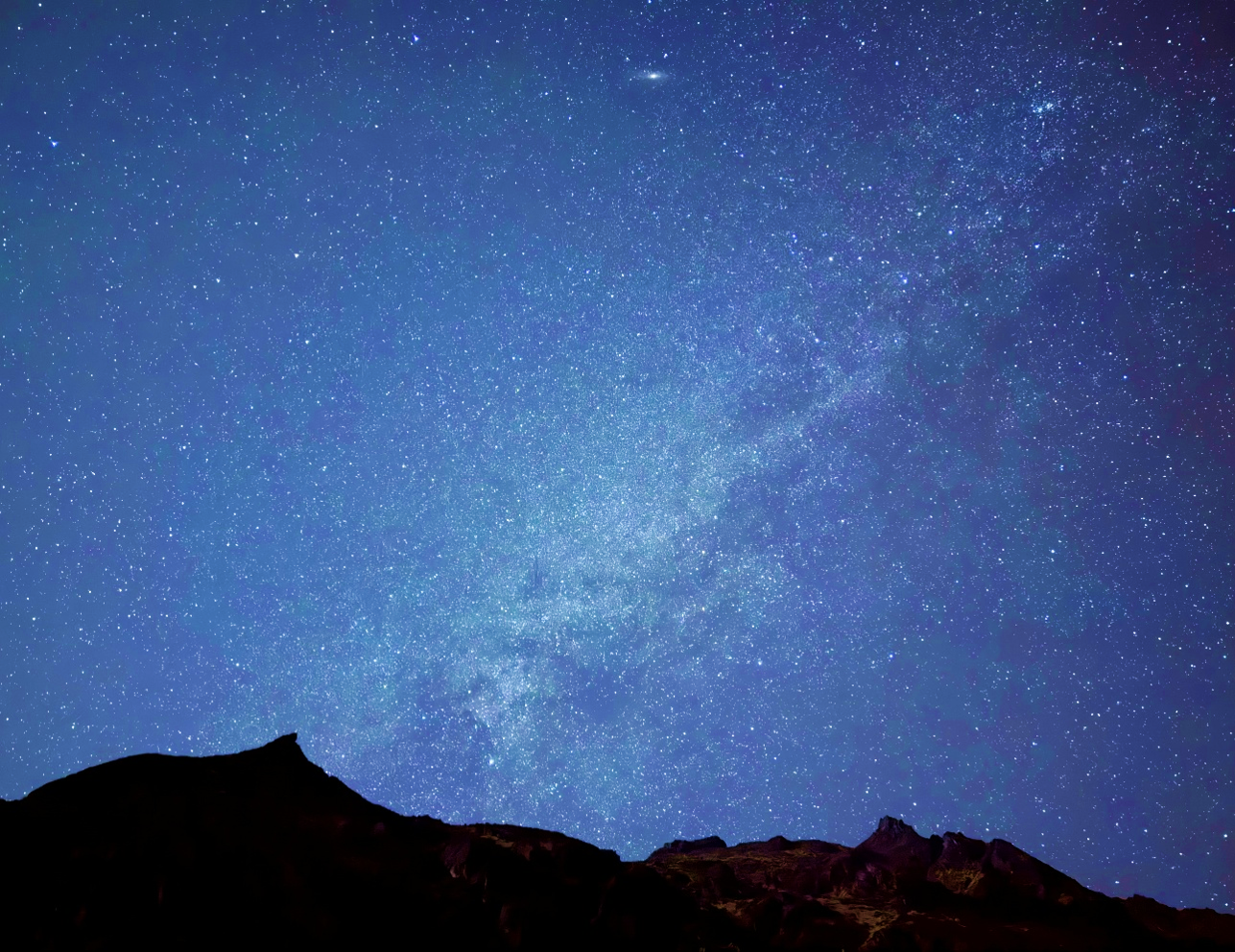
A Night Beneath Countless Stars
With virtually no light pollution, Dzongri offers spectacular night skies. On clear nights, thousands of stars illuminate the sky while the Milky Way stretches across the mountains. For photography enthusiasts, this is one of the finest campsites in India for astrophotography.
Frontpoint Adventures Expert Advice
At over 4,000 meters, temperatures drop rapidly after sunset. Carry: • Insulated jacket • Thermal layers • Warm gloves • Woolen cap • Thick socks • Headlamp for nighttime movement Keeping warm is essential for a comfortable night's rest before the spectacular sunrise awaiting you the next morning.
Why Day Four Becomes Every Trekker's Favorite
The journey from Tshoka to Dzongri represents the true transition from dense Himalayan forests to high-altitude wilderness. Towering rhododendrons, open alpine landscapes, breathtaking mountain views, and unforgettable sunsets combine to create one of the most rewarding trekking days anywhere in India. For many adventurers, this is the day they truly fall in love with the Goecha la Trek.
Day 5 – Dzongri to Thansing: Walking Through the Alpine Wilderness Altitude: 4,020 m to 3,800 m Distance: Approx. 9 km Duration: 5–6 Hours
Day five begins long before sunrise. While most of the campsite is still asleep, trekkers prepare for one of the most rewarding moments of the entire expedition—the climb to Dzongri Top. This early morning excursion is often considered a highlight in itself, offering panoramic views that few places in the Himalayas can match.
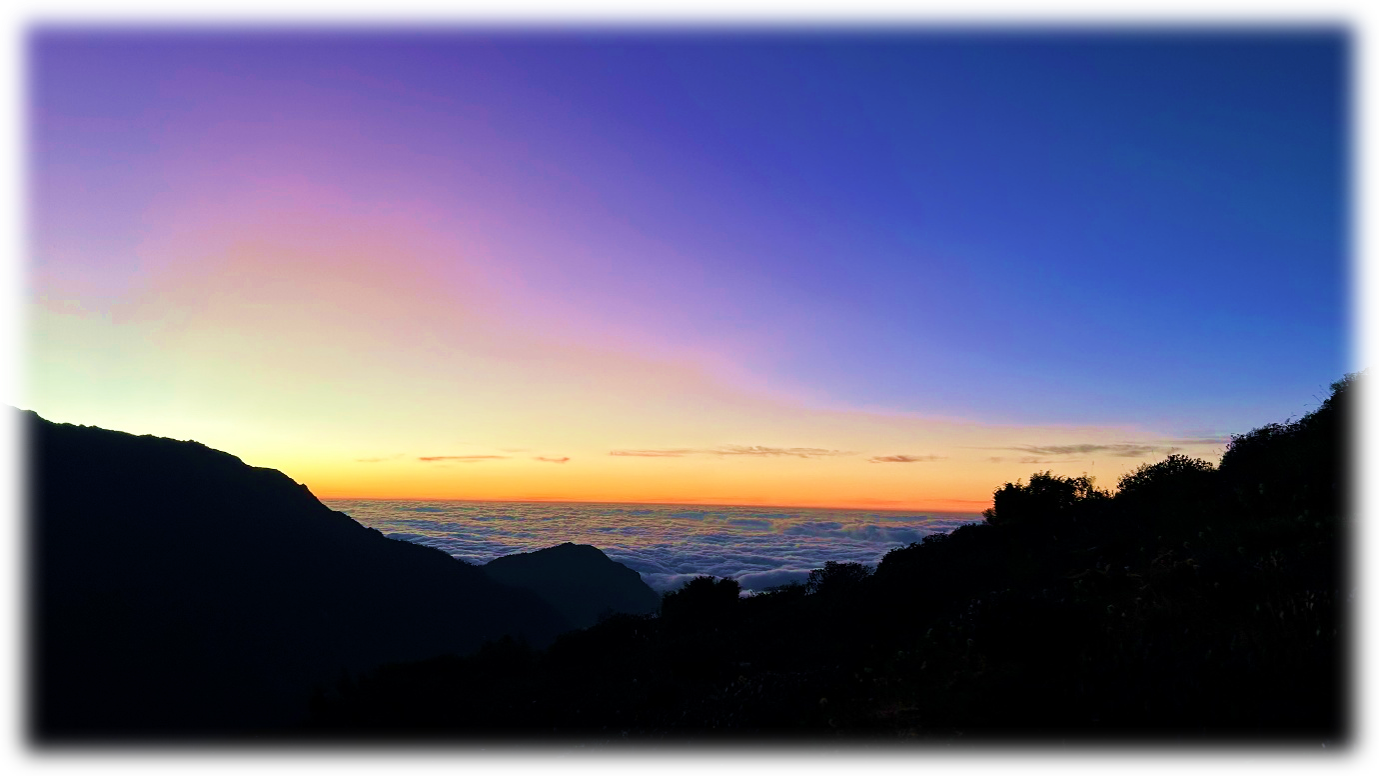
Sunrise at Dzongri Top
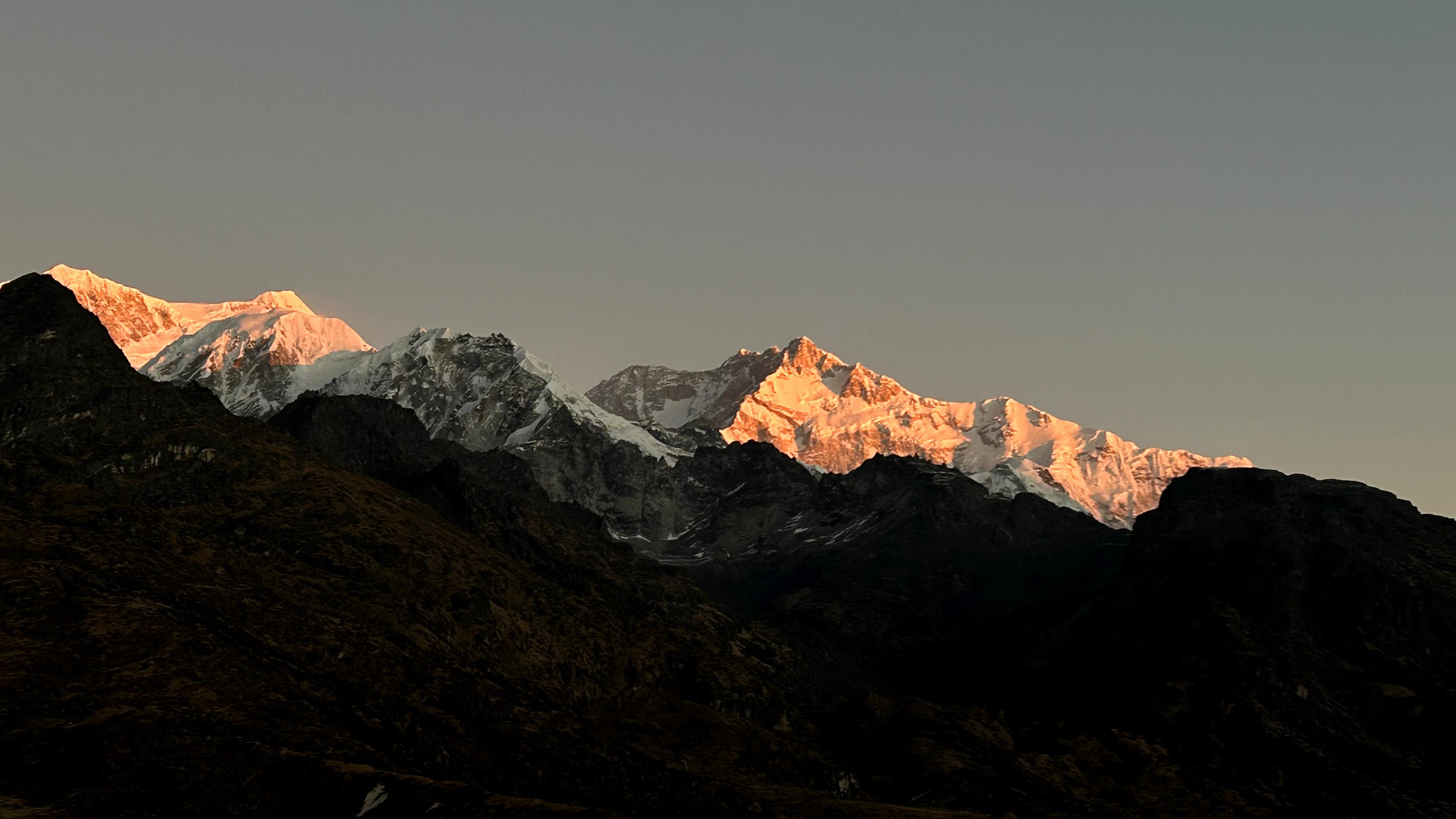
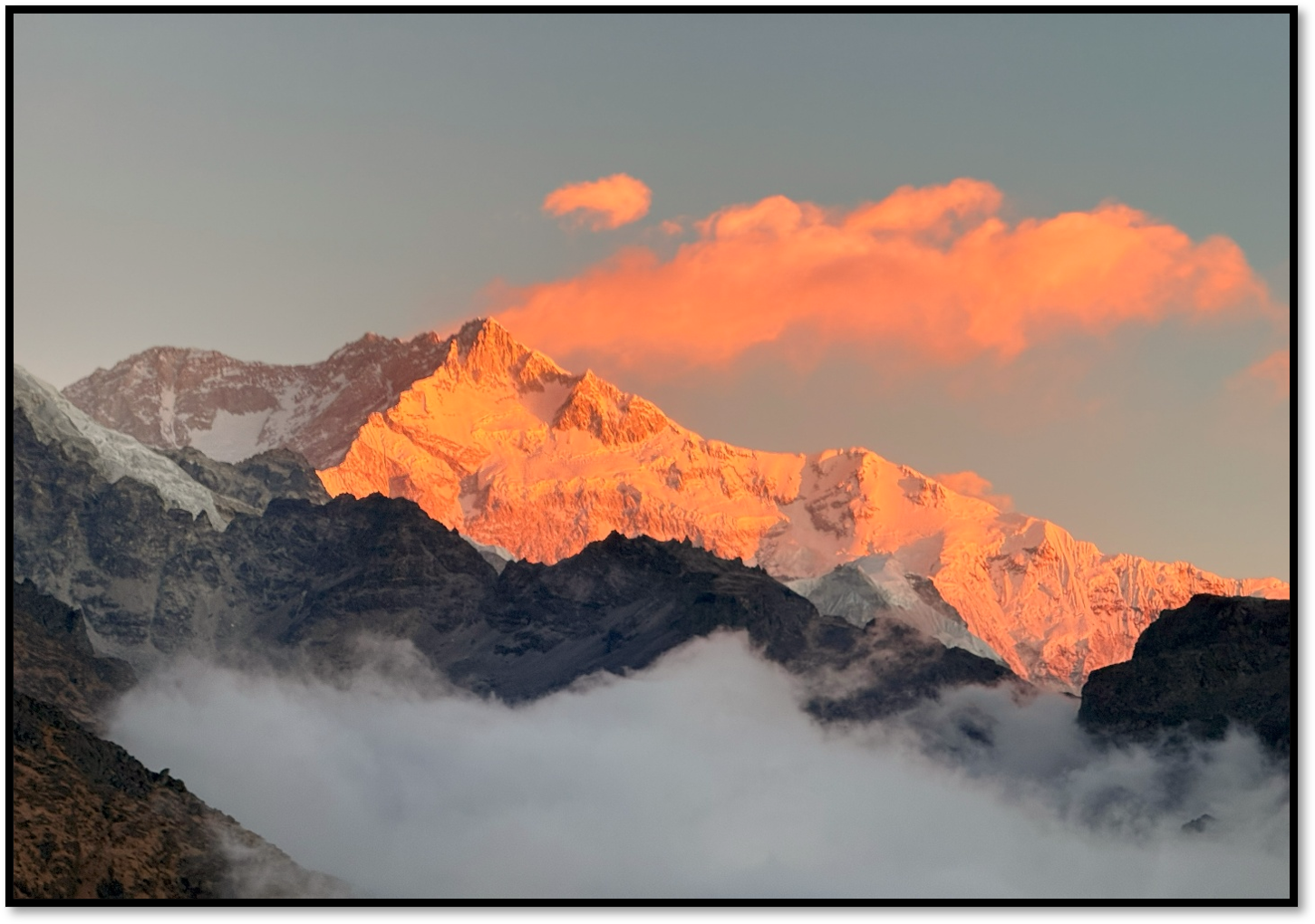
Leaving the campsite before dawn, the trail climbs steadily to Dzongri Top. The cold mountain air, the crunch of boots on the trail, and the silence of the Himalayan wilderness create an atmosphere that is both peaceful and exciting. As the first rays of sunlight appear on the horizon, the snow-covered peaks begin to glow. One by one, the mighty summits of the Kanchenjunga massif are painted in shades of gold, orange, and pink. Watching the world's third-highest mountain come alive under the morning light is an experience that photographs can never fully capture. From the viewpoint, trekkers are rewarded with breathtaking views of peaks such as Mt. Pandim, Kabru, Rathong, Kokthang, and several other giants of the Eastern Himalayas. The endless mountain panorama makes the early wake-up call completely worthwhile.
Descending Towards Thansing
After soaking in the sunrise, the group returns to camp for breakfast before continuing towards Thansing. Unlike the previous day's steep ascent, today's route is comparatively gentle. The trail undulates across open ridges, grassy slopes, and alpine valleys, allowing trekkers to truly appreciate the dramatic scenery. The landscape now feels entirely different from the forests left behind. Vast meadows stretch towards towering peaks, while the fresh mountain air and wide-open skies create an incredible sense of freedom.
Crossing the Prek Chu Valley
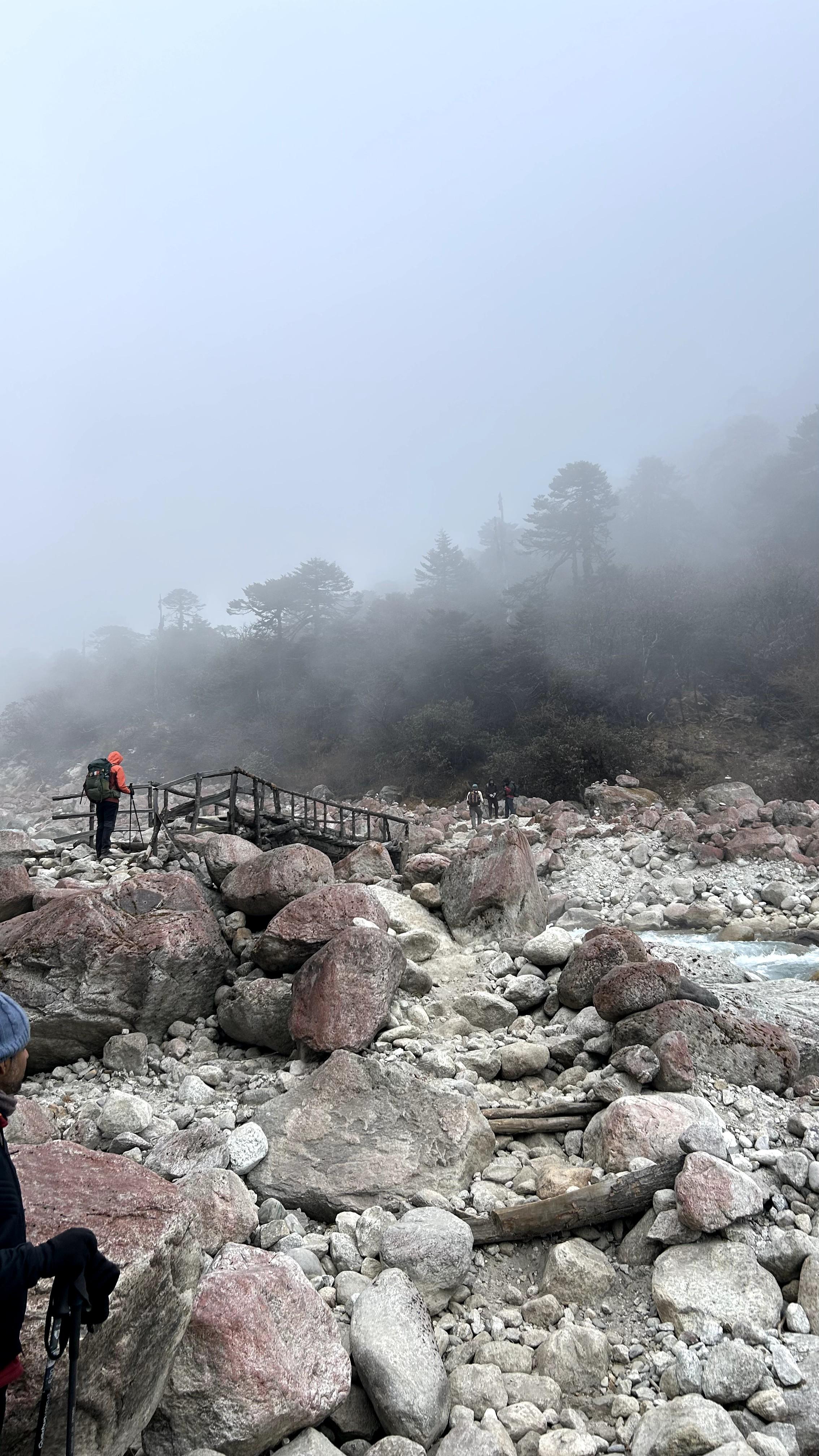
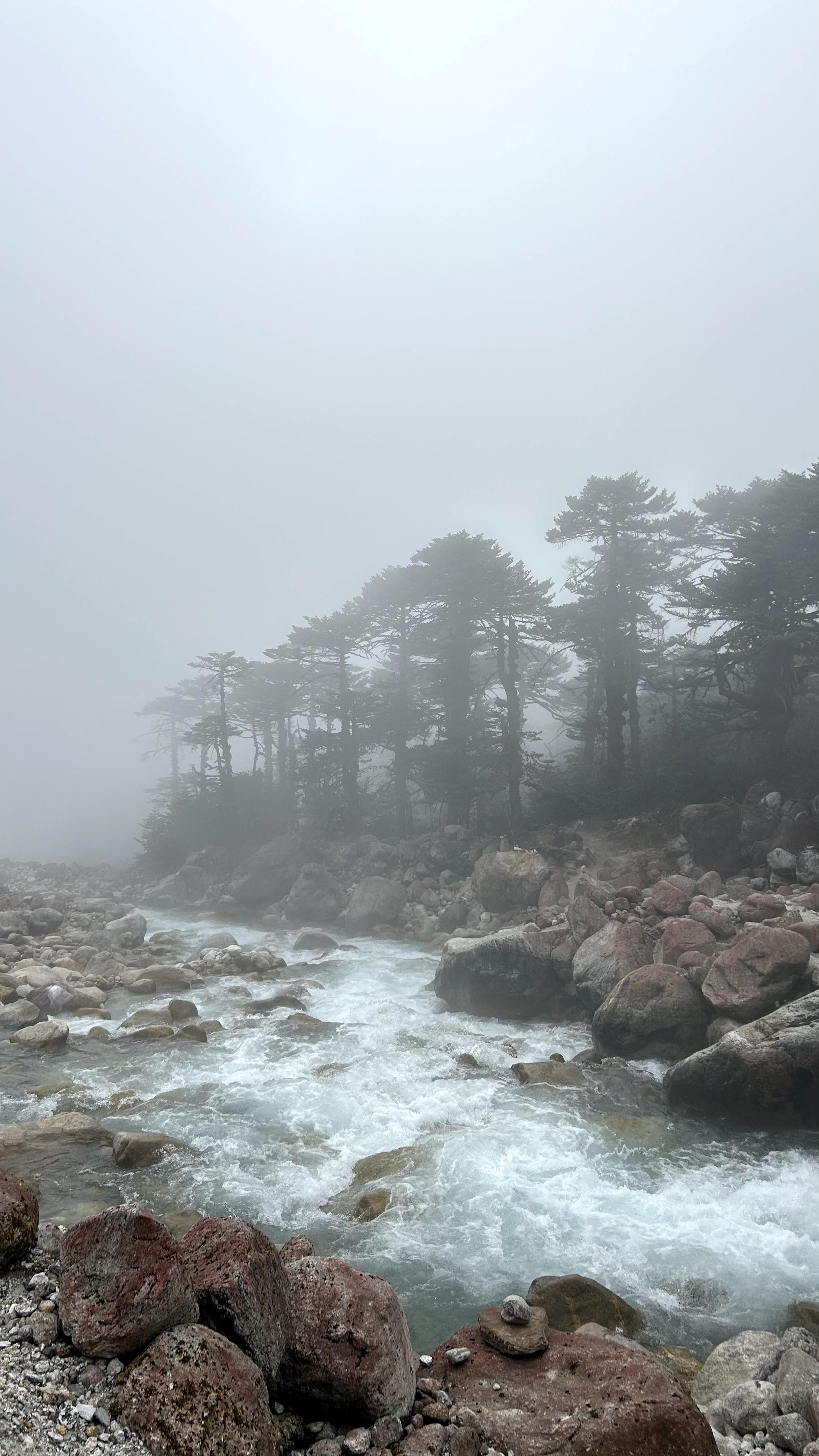
As the trail gradually descends, the beautiful Prek Chu River once again accompanies the journey. Several small wooden bridges cross streams fed by melting glaciers, while crystal-clear water rushes over smooth rocks below. The river valley is surrounded by alpine vegetation, dwarf junipers, and wildflowers during the summer months. The peaceful sound of flowing water makes this one of the most relaxing sections of the entire trek.
Walking Beneath Mt. Pandim
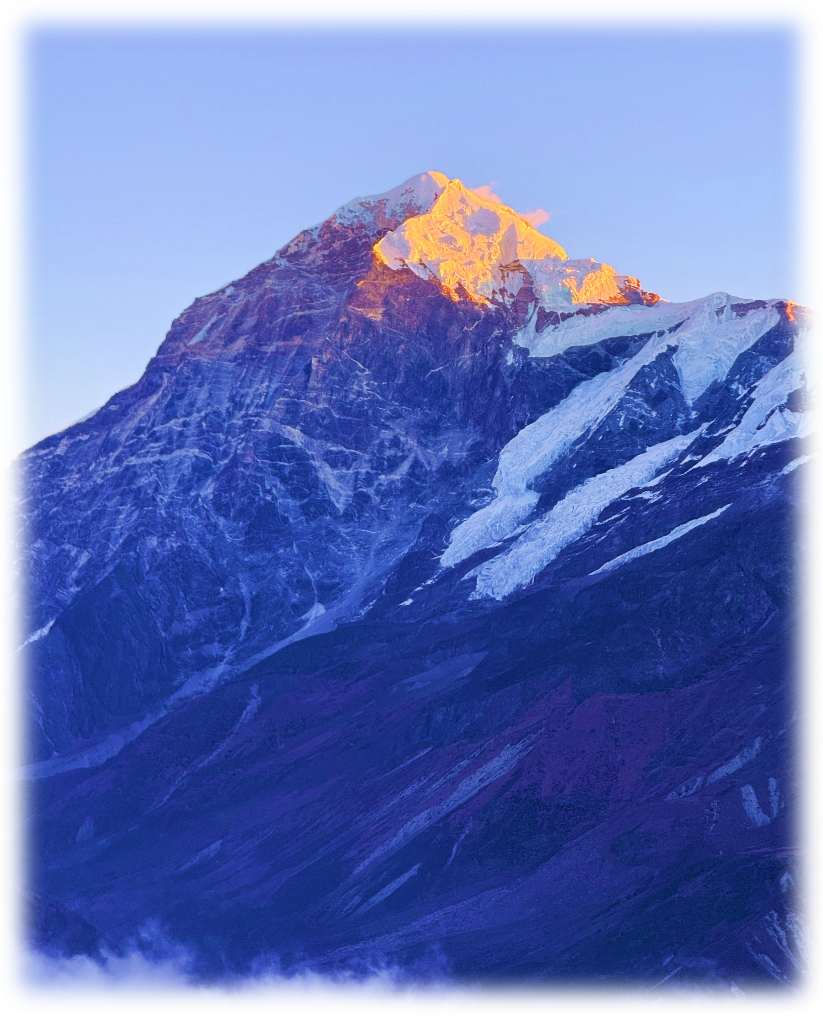
Perhaps the greatest attraction of today's journey is the ever-present view of Mt. Pandim (6,691 m). Standing tall above the valley, this elegant Himalayan peak dominates the skyline throughout the day. As the trail approaches Thansing, Mt. Pandim appears closer with every step, creating one of the most iconic mountain views in Sikkim. Many trekkers spend hours simply admiring its sharp ridges and snow-covered slopes.
Arrival at Thansing
Nestled within a vast alpine meadow at approximately 3,800 meters, Thansing is undoubtedly one of the most picturesque campsites on the Goecha la Trek. Unlike the forest camps encountered earlier, this campsite is completely open, surrounded by rolling grasslands and magnificent mountain scenery. Colorful tents scattered across the meadow create a beautiful contrast against the backdrop of towering snow peaks. The peaceful surroundings make it easy to understand why many trekkers describe Thansing as their favorite campsite.
Evening in the High Himalayas
As evening approaches, temperatures begin dropping rapidly. Clouds drift lazily across Mt. Pandim while the surrounding peaks slowly change color under the setting sun. A warm cup of tea shared with fellow trekkers becomes one of the day's greatest pleasures. Once darkness falls, the stars emerge in spectacular numbers, creating another unforgettable Himalayan night.
Frontpoint Adventures Expert Tip
Although today's walk is relatively easier, remember that you're still trekking above 3,800 meters. Continue drinking plenty of water, eat nutritious meals, avoid unnecessary exertion, and allow your body to recover before the summit day. Good rest tonight is essential for tomorrow's high-altitude adventure.
Day 6 – Thansing to Lamuney: Preparing for the Ultimate Himalayan Sunrise Altitude: 3,800 m to 4,150 m Distance: Approx. 4 km Duration: 2–3 Hours
Today's trek may be shorter than previous days, but it plays a vital role in preparing trekkers for the most anticipated stage of the expedition. Depending on weather conditions, group fitness, and acclimatization, the trek leader may decide either to stay at Thansing for another night or continue to Lamuney, the final campsite before Goechala View Point 1. This flexible approach helps maximize safety while improving everyone's chances of enjoying the summit day comfortably.
Gentle Alpine Trail
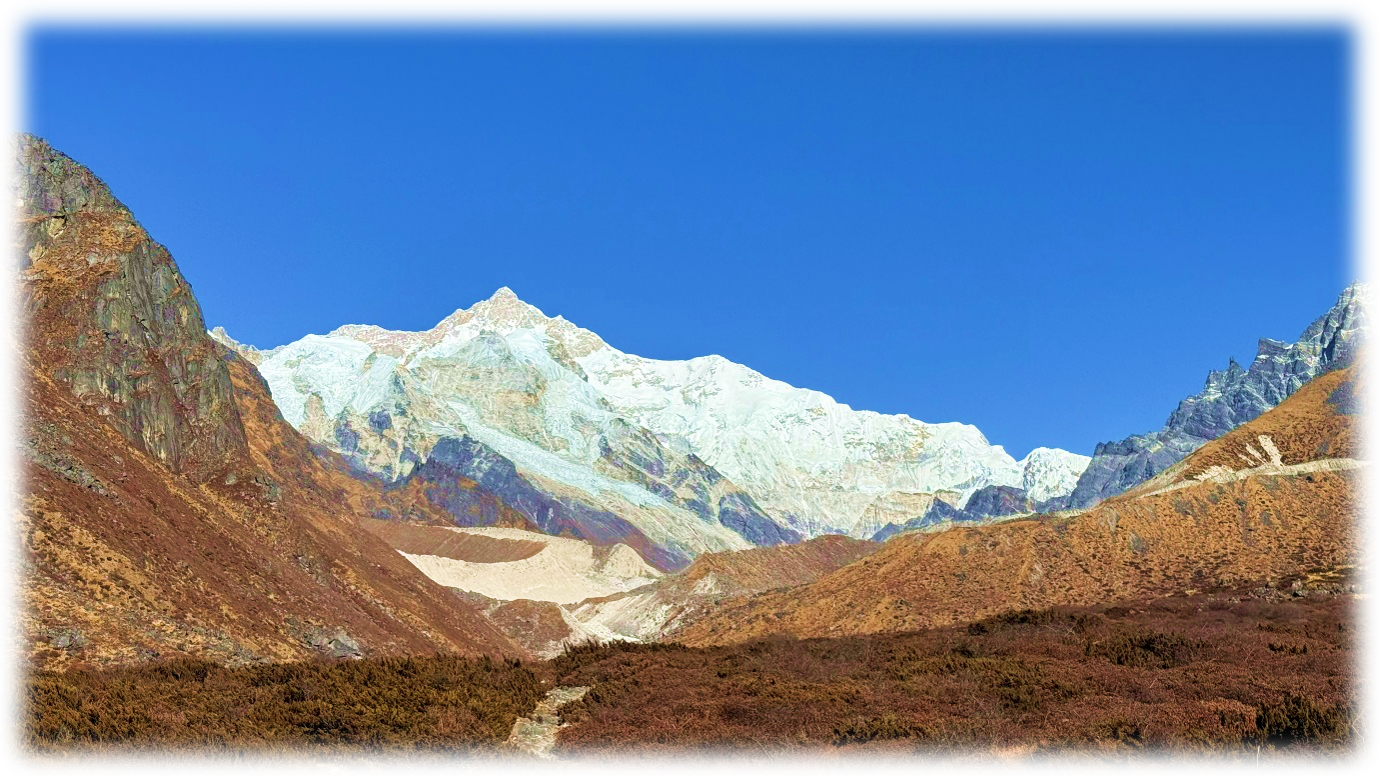
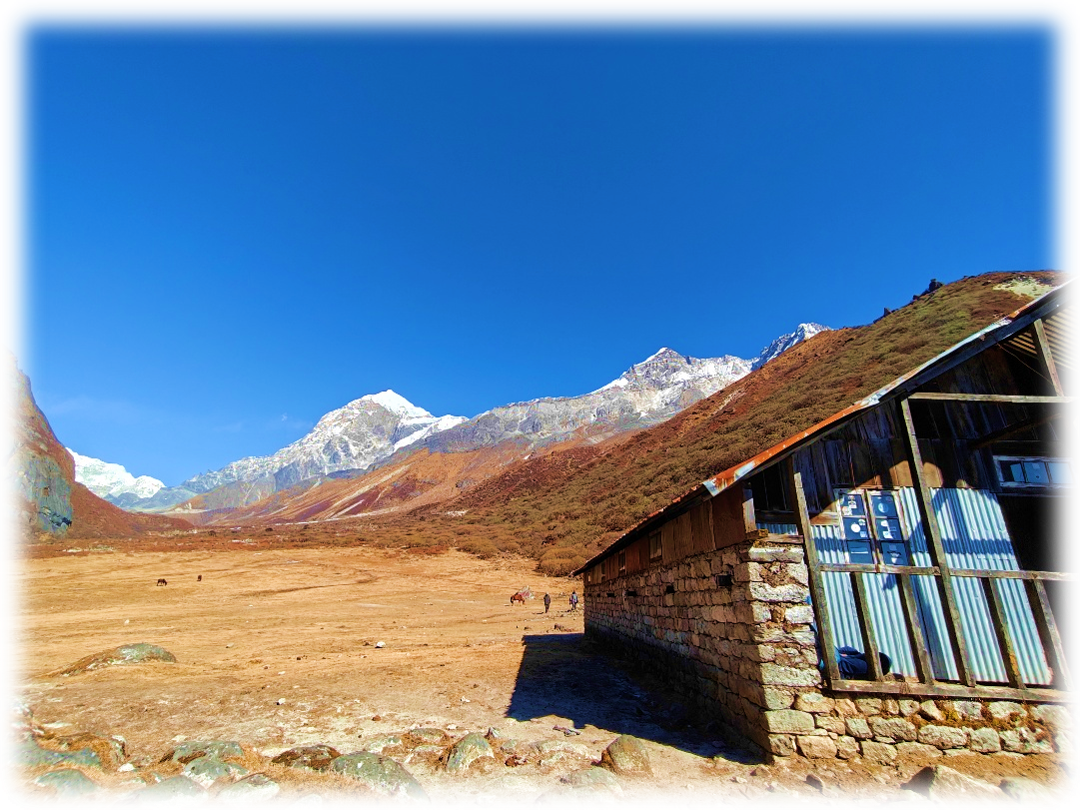
The route from Thansing to Lamuney follows an easy alpine path through broad valleys carved by ancient glaciers. The terrain is mostly gradual, allowing trekkers to conserve energy while enjoying uninterrupted mountain views. Unlike previous forest sections, the landscape here is almost completely treeless. The surrounding mountains now dominate every direction, making trekkers feel wonderfully small in the vast Himalayan wilderness.
A Valley Shaped by Glaciers
The terrain around Lamuney offers fascinating evidence of ancient glacial activity. Large boulders, rocky moraines, alpine grasslands, and winding streams all reveal how glaciers shaped this remarkable valley over thousands of years. Nature photographers particularly enjoy this section because every turn presents another dramatic composition.
Alpine Flora and Wildlife
Despite the harsh environment, life continues to thrive here. Depending on the season, trekkers may encounter: • Himalayan Blue Sheep (Bharal) • Mountain Ravens • Snow Pigeons • Himalayan Griffon Vultures • Colourful alpine flowers during summer • Tiny medicinal plants unique to high-altitude ecosystems These fragile environments remind us why responsible trekking and environmental conservation are so important.
Lamuney – The Final Camp
Situated close to the foot of the surrounding mountains, Lamuney serves as the last overnight stop before the summit attempt. The campsite is small, peaceful, and surrounded by dramatic Himalayan scenery. As evening approaches, excitement begins building throughout the group. Backpacks are reorganized. Headlamps are checked. Warm clothing is prepared. Water bottles are filled. Everyone knows that tomorrow's adventure begins well before sunrise.
Preparing for Summit Day
The trek leader conducts a detailed briefing covering: • Departure timing • Weather conditions • Trail safety • Walking pace • Layering strategy • Hydration reminders • Emergency procedures Proper preparation is one of the biggest reasons successful summit days remain enjoyable and safe.
Frontpoint Adventures Essential Checklist
Before sleeping, ensure you have: ✔ Headlamp with fresh batteries ✔ Insulated jacket ✔ Waterproof outer layer ✔ Warm gloves ✔ Woollen cap ✔ Trekking poles ✔ Energy snacks ✔ Two litres of water ✔ Personal medications ✔ Camera or phone with fully charged batteries Remember that cold temperatures reduce battery life quickly at high altitude.
Why Day Six Is So Important
Although relatively short, this stage of the trek allows trekkers to rest, acclimatize further, and mentally prepare for the grand finale. The calm atmosphere of Lamuney, surrounded by towering Himalayan peaks and complete wilderness, creates an unforgettable sense of anticipation. Tomorrow, every step will bring you closer to one of the most spectacular mountain viewpoints in the Indian Himalayas.
Trek Leader's Advice from Frontpoint Adventures
The summit isn't about speed—it's about patience, teamwork, and respecting the mountains. Walk steadily, trust your guide, and listen to your body. The Himalayas reward those who move with humility, and every careful step brings you closer to an unforgettable sunrise beneath the mighty Kanchenjunga.
Day 7 – Summit Day: Witnessing the Majesty of Kanchenjunga at Goecha la View Point 1 Altitude: Approximately 4,600 m (View Point 1) Distance: 10–12 km (round trip from Thansing/Lamuney) Duration: 10–12 Hours
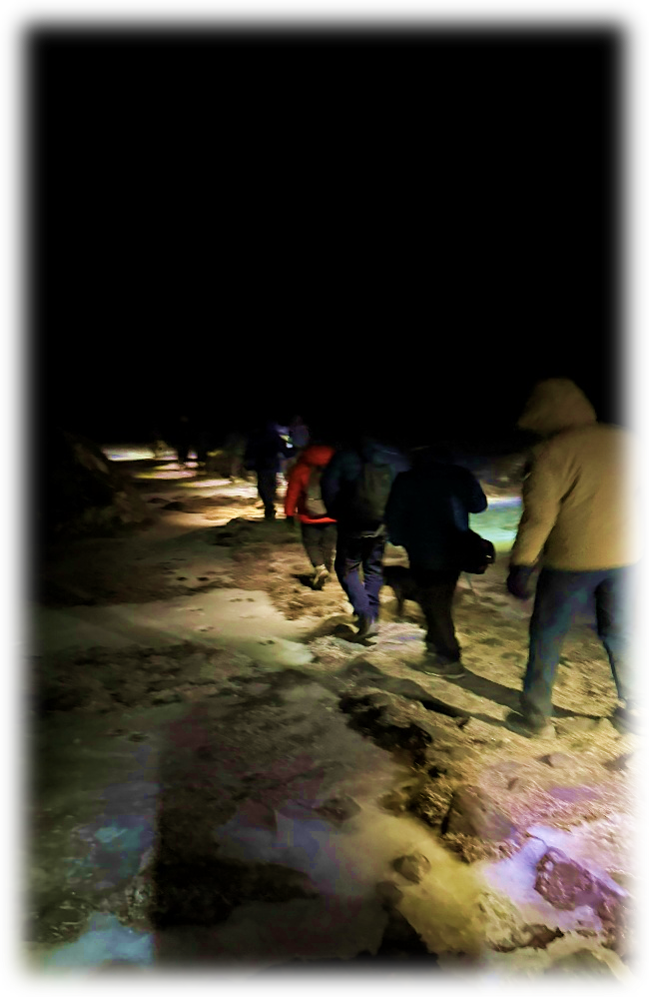
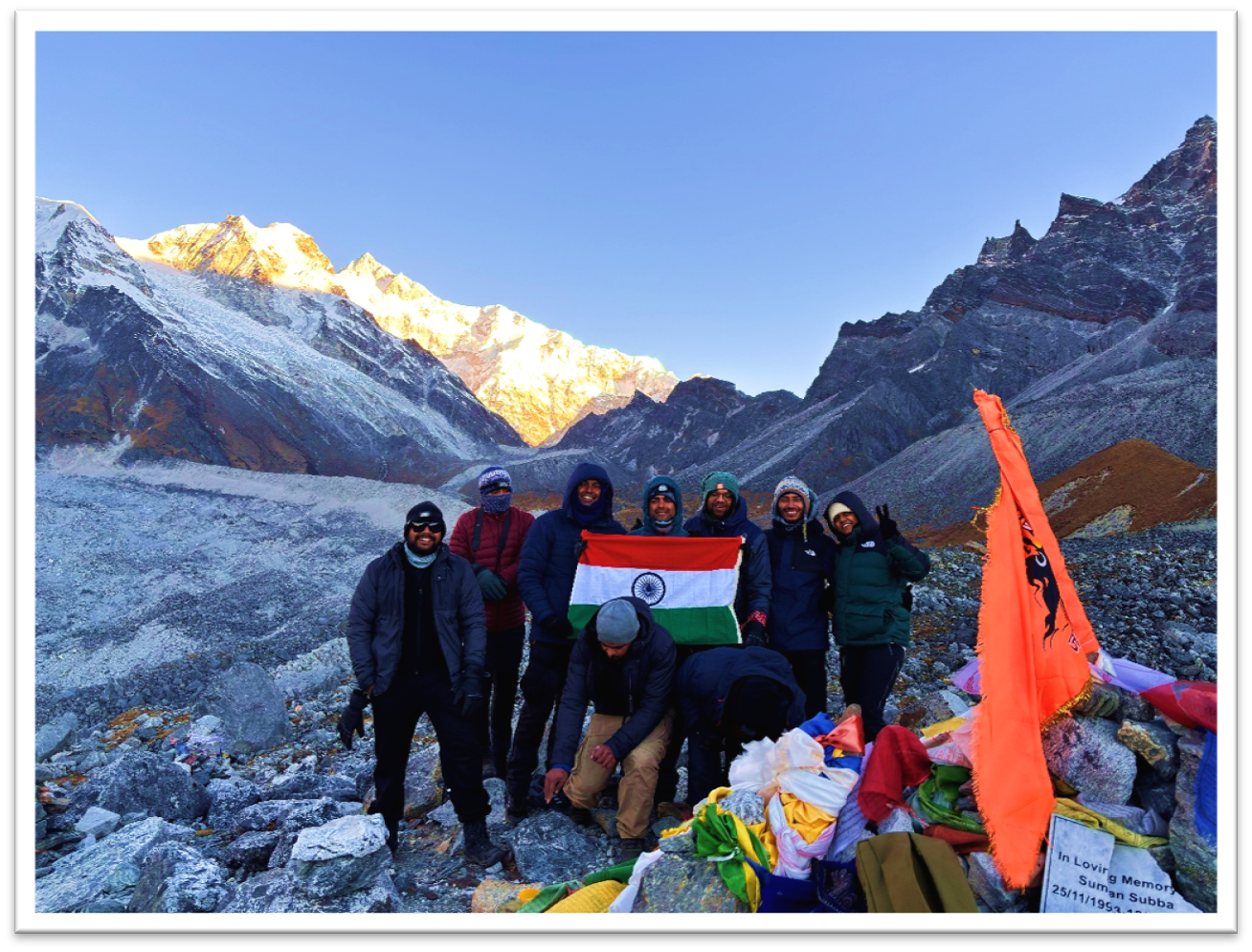
After days of gradual ascent, careful acclimatization, and unforgettable campsites, the most anticipated day of the Goechal a Trek finally arrives. The journey begins in complete darkness, usually between 1:00 AM and 3:00 AM, depending on the campsite and weather conditions. Equipped with headlamps, warm layers, and determination, trekkers leave their tents behind and step into the silent Himalayan night. Although the trail is challenging, every step forward brings you closer to one of the most spectacular mountain viewpoints in India.
The Journey Back
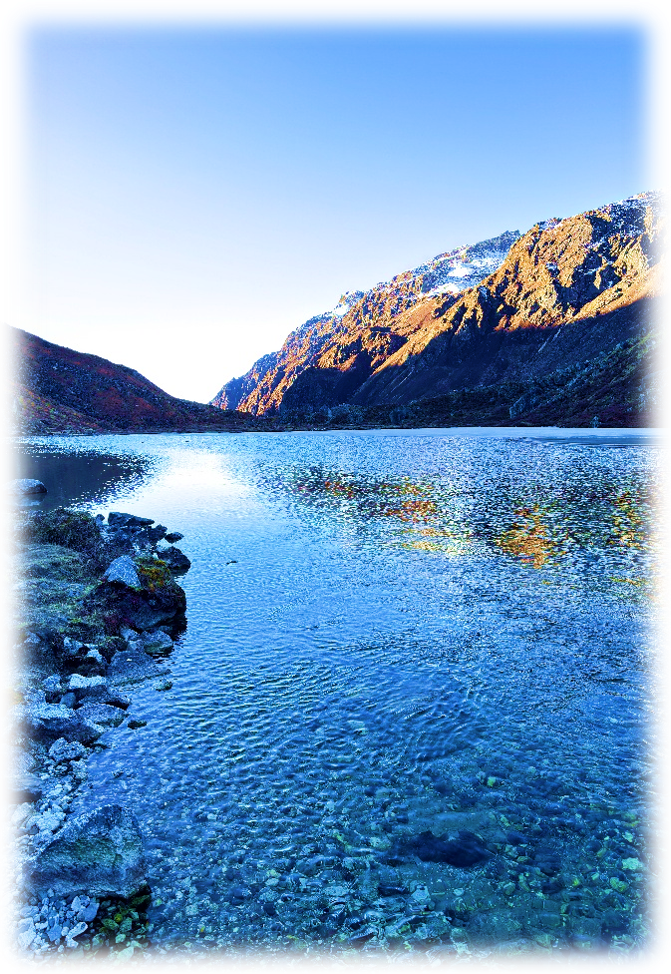
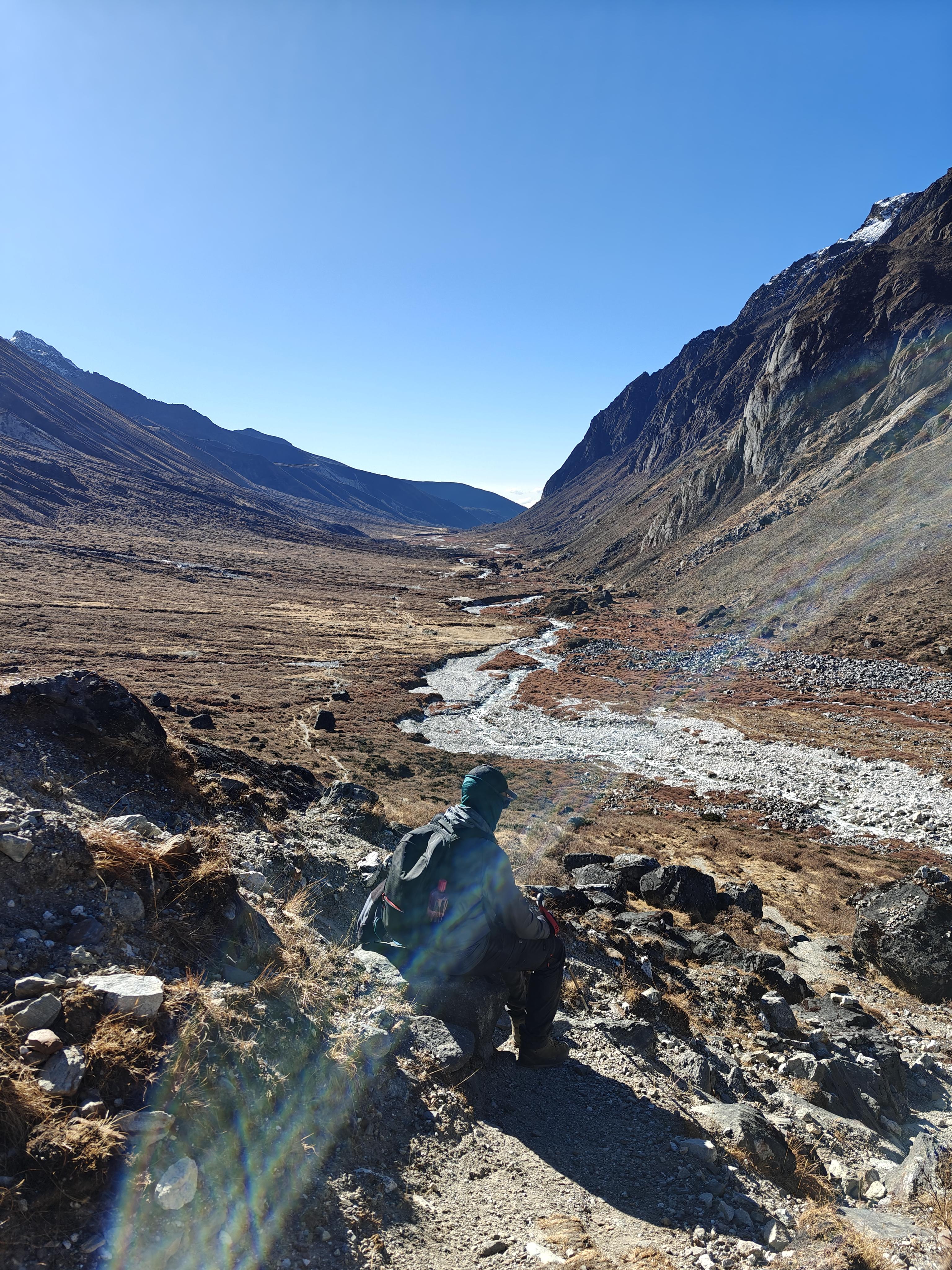
After spending time at the viewpoint and capturing photographs, the group begins the descent. Returning during daylight offers an entirely different perspective of the landscape. Rocky ridges, glacial valleys, and alpine meadows that remained hidden during the night become clearly visible. The return journey also provides another opportunity to admire the beauty of Samiti Lake under the morning sunlight before continuing back to Lamuney or Thansing.
Days 8 & 9 – Returning to Yuksom
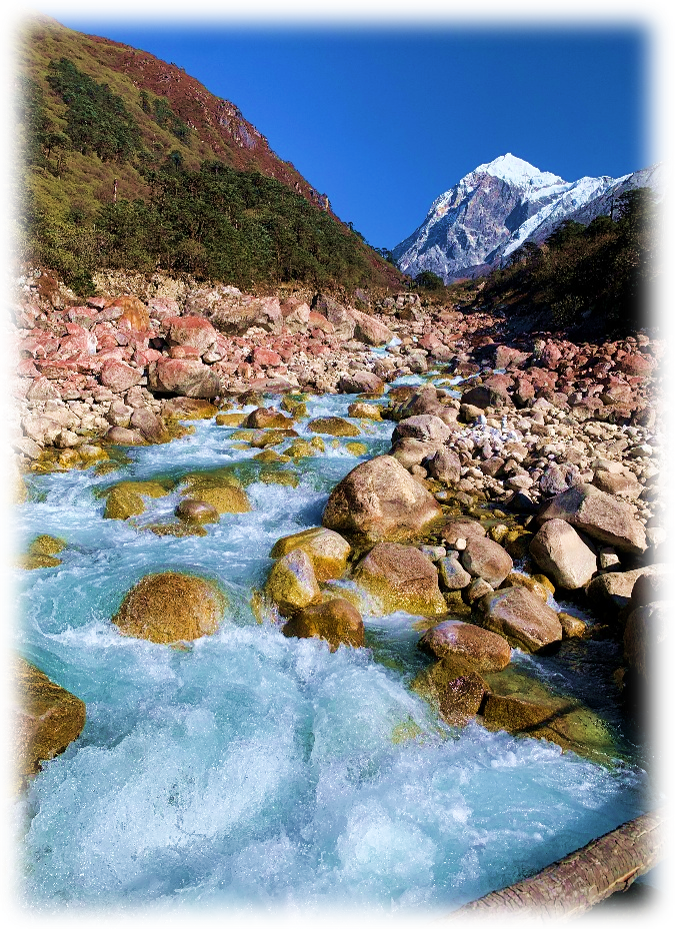
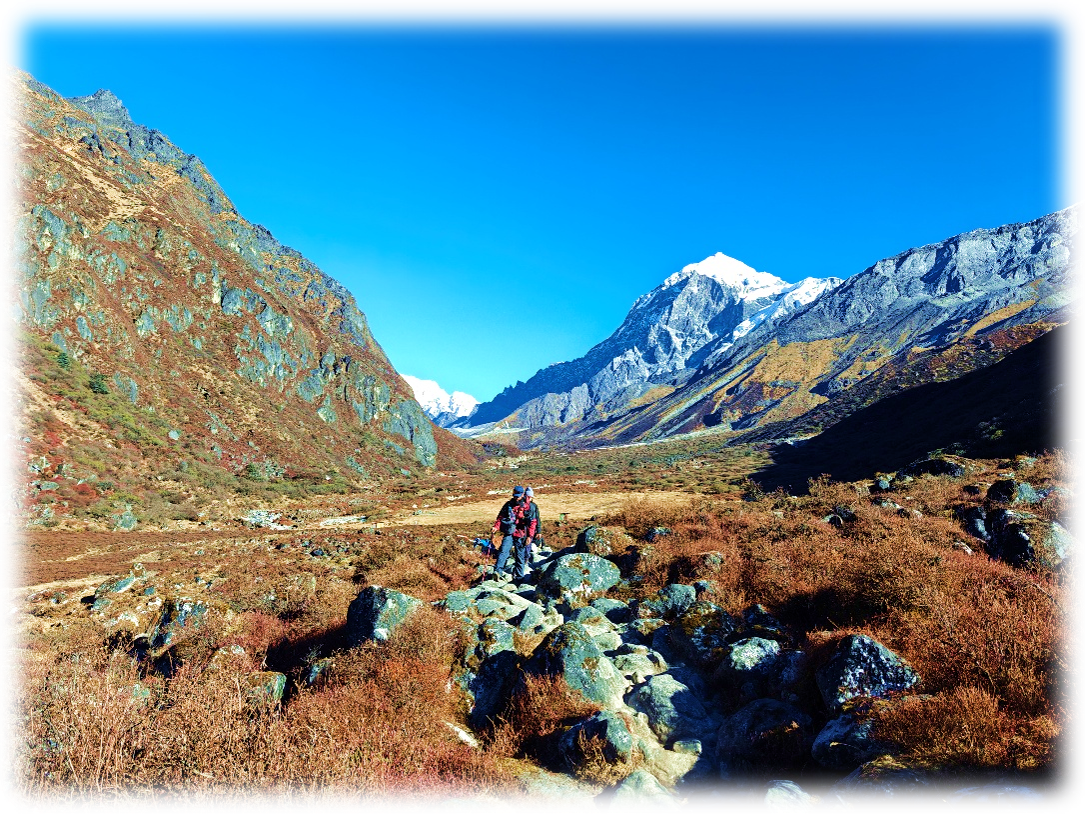
Every trek eventually comes to an end, but the return journey is far from ordinary. Descending through the same trail allows trekkers to notice details that were easily missed during the ascent. The forests appear even greener. The rivers sound more familiar. The suspension bridges now remind you how far you've travelled. Passing once again through Kokchurung, Tshoka, Sachen, and finally Yuksom, each campsite brings back memories of the adventure that unfolded over the previous days. Although the descent is physically easier, proper technique is important to reduce stress on the knees and ankles. Trekking poles, controlled walking, and regular hydration make the return journey much more comfortable.
Best Time to Experience the Goechala Trek
The Goechala Trek offers two outstanding trekking seasons, each with its own charm. Spring (April to May) Spring transforms the forests into a colourful paradise. Thousands of rhododendrons bloom across the hillsides, creating vibrant landscapes filled with red, pink, purple, and white flowers. Pleasant daytime temperatures and clear mountain views make this one of the most popular seasons. Autumn (September to November) Autumn is known for its crystal-clear skies and exceptional visibility. The monsoon washes away dust and haze, leaving behind sharp mountain views that are ideal for photography. Stable weather and comfortable trekking conditions make this another excellent time to visit.
Trek Difficulty
The Goecha la Trek is considered a moderate to challenging Himalayan trek. Trekkers should be prepared for: • Multi-day trekking • High-altitude camping • Steep ascents and descents • Long walking hours • Cold temperatures • Basic mountain facilities With proper fitness and preparation, the trek is achievable for both experienced trekkers and determined beginners.
Essential Packing List
Before beginning the trek, ensure your backpack includes: • Waterproof trekking shoes • Thermal innerwear • Down or insulated jacket • Waterproof shell jacket • Trekking trousers • Warm gloves • Woollen cap • UV sunglasses • Sunscreen (SPF 50+) • Trekking poles • Headlamp • Personal medicines • Reusable water bottles • Energy bars and dry fruits • Rain covers for backpack • Camera or smartphone Packing wisely makes a significant difference in your overall trekking experience.
Responsible Trekking
The Himalayas are fragile ecosystems that deserve our respect. At Frontpoint Adventures, we encourage every participant to follow responsible trekking practices: • Carry back all non-biodegradable waste. • Avoid single-use plastics. • Stay on designated trails. • Respect local customs and traditions. • Do not disturb wildlife. • Conserve water wherever possible. • Leave every campsite cleaner than you found it. Small actions by every trekker help preserve these mountains for future generations.
Why Choose Frontpoint Adventures?
A successful Himalayan expedition depends on much more than reaching the destination. At Frontpoint Adventures, we focus on creating safe, enjoyable, and memorable mountain experiences through: • Experienced trek leaders certified in mountain safety • Well-planned itineraries with proper acclimatisation • Nutritious and hygienic meals on the trail • High-quality camping equipment • Small group sizes for a personalized experience • Emergency response planning and first-aid support • Responsible and eco-friendly trekking practices From your first inquiry to your final day on the trail, our team is committed to making your journey both safe and unforgettable.
Final Thoughts
The Goechala Trek is more than a route through the Himalayas—it is an immersive experience that combines adventure, culture, wildlife, and breathtaking natural beauty. Every stage of the journey reveals something unique, from ancient forests and suspension bridges to alpine meadows, glacial lakes, and awe-inspiring mountain vistas. Standing before the mighty Kanchenjunga at sunrise is undoubtedly a highlight, but the true magic of Goechala lies in the journey itself. Every campsite, every trail, and every sunrise become part of a story you'll carry long after the trek ends. Whether you're chasing your first Himalayan adventure or returning for another high-altitude expedition, the Goechala Trek promises an experience that is both challenging and deeply rewarding.
Explore the Himalayas with Frontpoint Adventures
Join us on one of India's most iconic trekking adventures and discover the untouched beauty of Kanchenjunga National Park. Our experienced team is ready to guide you through every step of the journey, ensuring a safe, memorable, and truly authentic Himalayan experience. Adventure begins where the road ends. Let Frontpoint Adventures take you there.