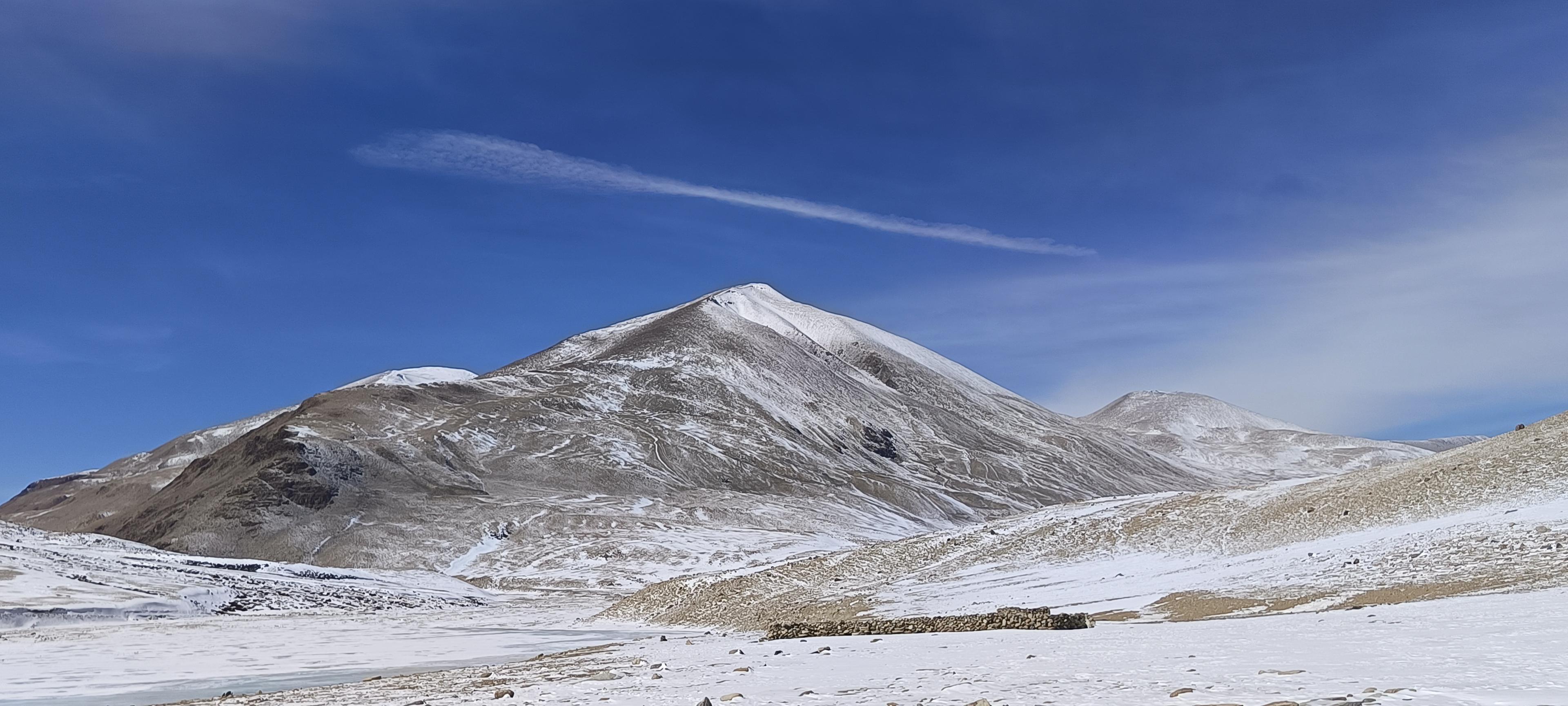
In the heart of eastern Ladakh’s Changthang Plateau, rising sharply above the wind-swept shores of the frozen Kyagar Tso, stands Mt. Kiagar Ri (6,104 m / 20,026 ft). During the brief summer months, Kiagar Ri is often spoken of as a manageable, non-technical trekking peak—a stepping stone for ambitious hikers looking to bag their first 6,000-meter summit without wrestling steep technical ice walls.
Come December to February , that classification dissolves.
When winter locks down the high plateau, Mt. Kiagar Ri turns into a severe high-altitude proving ground. The air thins to less than half of sea-level density, the mercury plunges below -30°C, and the unrelenting Tibetan winds scour the ridgelines bare. Climbing Kiagar Ri in winter is not a casual holiday hike; it is an authentic alpine crucible that demands rigorous expedition discipline, deep physiological awareness, and flawless cold-weather management.
1. The Geography of Isolation: The Changthang Plateau
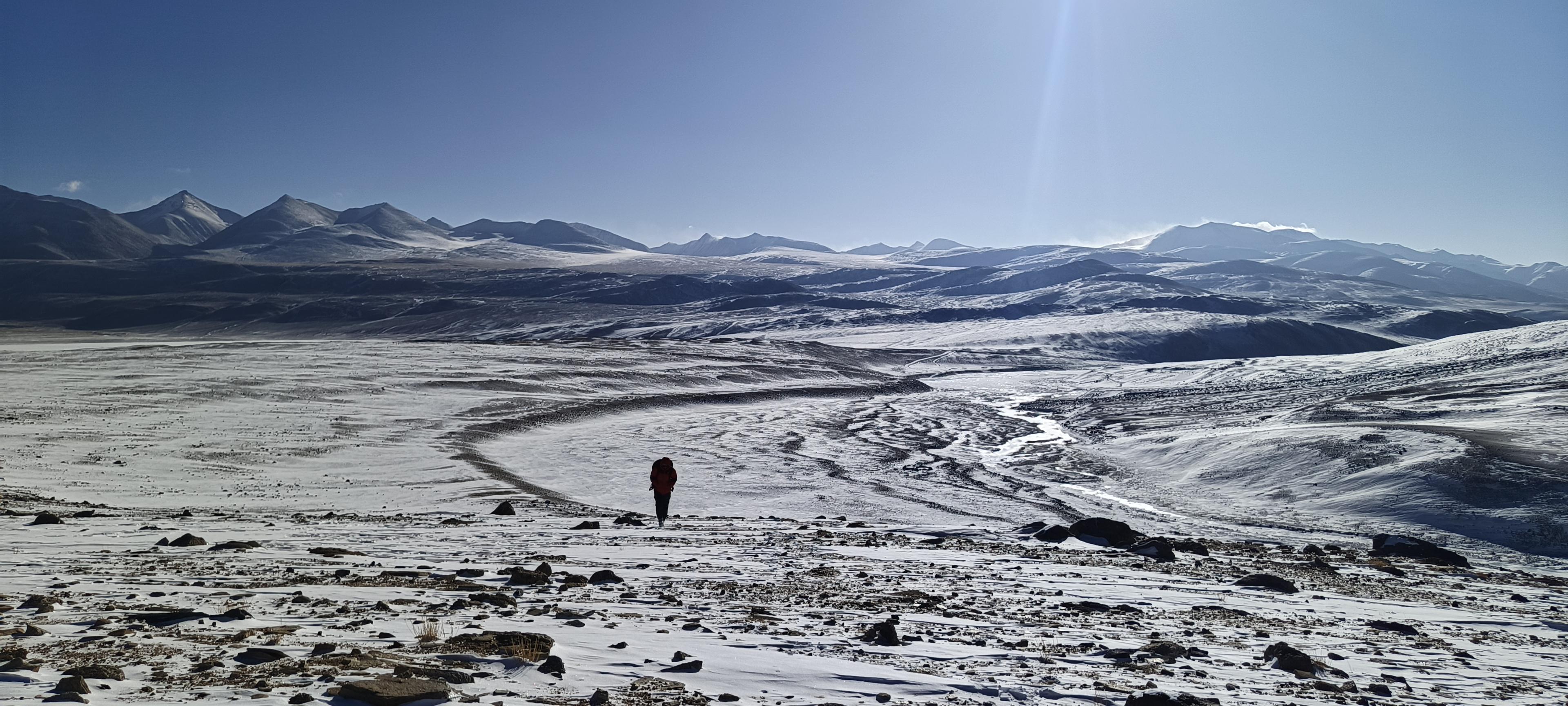
To understand Mt. Kiagar Ri, one must first understand its home. The peak sits within the Changthang Wildlife Sanctuary, an extension of the great Tibetan Plateau that stretches across southeastern Ladakh at an average baseline elevation of over 4,200 meters. Unlike the jagged, vertical granite spires of the Karakoram or the lush, moisture-laden valleys of the Pir Panjal, the Changthang is characterized by colossal, open expanses, rolling barren hills, and massive endorheic salt and freshwater basins. Dominating the valley floor near the mountain’s base is Kyagar Tso, a high-altitude lake sitting at 4,570 meters, with the legendary Tso Moriri sprawling just further south. In winter, this geographic architecture creates a microclimate defined by extreme thermal contrast and absolute aridity.
• The Cold Sink Effect: The flat plateau behaves as a natural thermal basin. Cold, dense air drains off the surrounding ridges during the night and pools over the valley floor, creating brutal temperature drops before sunrise. • Katabatic Wind Funnels: Strong winds rip unobstructed across hundreds of kilometers of open plains. On the exposed ridges of Kiagar Ri, sustained gusts of 40 to 60 km/h are common, turning sub-zero temperatures into dangerous wind chills. • The Absence of Moisture: Winter in Ladakh is dry. Precipitation is relatively low compared to the western Himalayas, but what little snow falls does not melt; it is whipped by wind into hard-packed crusts (sastrugi) or powder drifts hidden inside boulder fields. Standing at the foot of Kiagar Ri in January, you are surrounded by a stark, silent monochrome world: white scree slopes, dark brown metamorphic rock, deep blue ice sheets on Kyagar Tso, and an indigo sky that looks closer than anywhere else on earth.
2. Mountain Anatomy: What Makes the Climb Unique
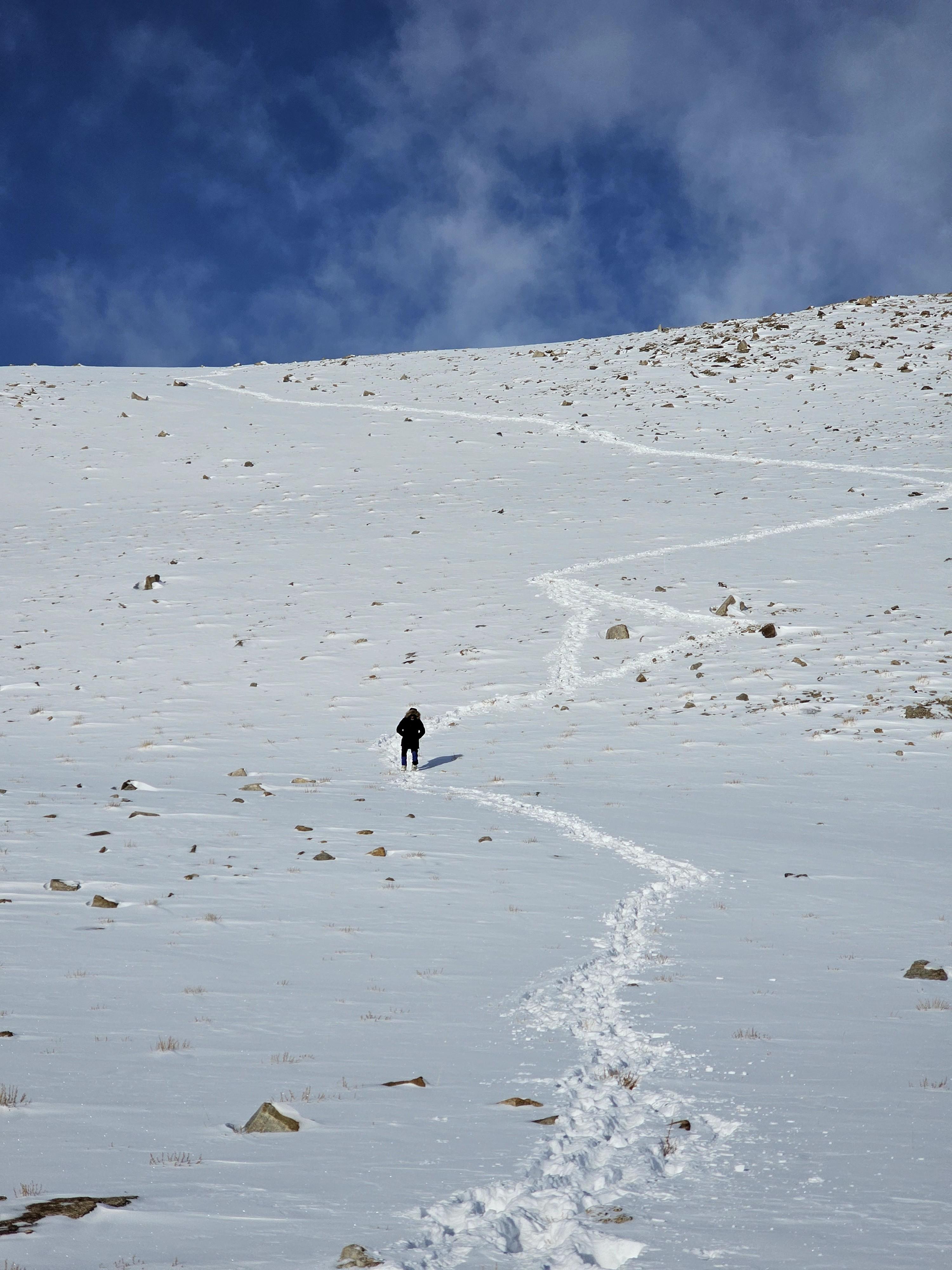
Mt. Kiagar Ri is classified as an "alpine walk-up" in terms of mountaineering technicality, meaning it does not feature vertical serac bands, yawning crevasse fields, or vertical rock faces requiring double ice axes and traditional pitch-by-pitch protection. However, calling it "easy" misses the reality of winter conditions. The terrain presents specific alpine challenges that test endurance, balance, and cold tolerance.
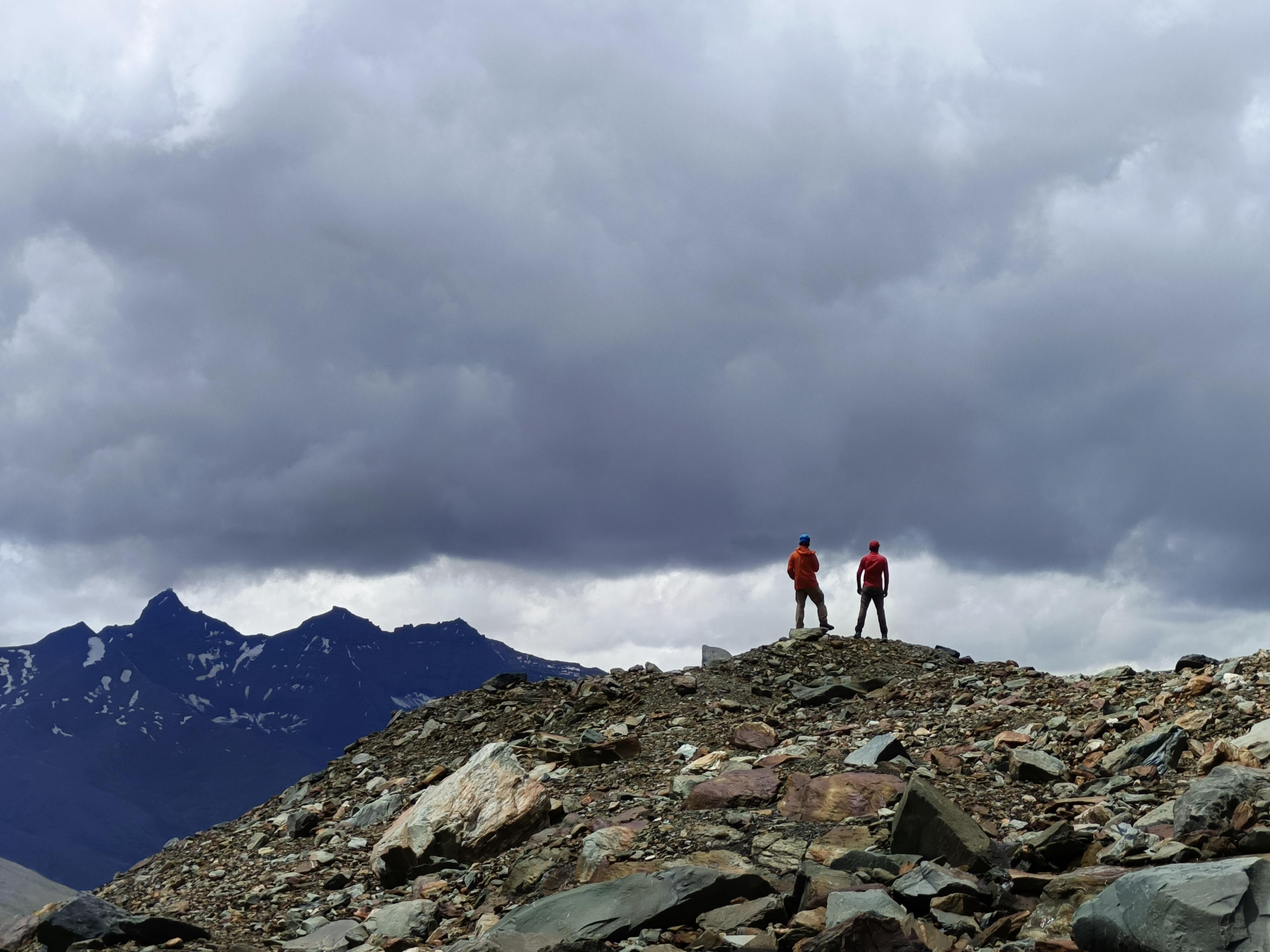
Scree, Moraine, and Hidden "Verglas" The lower and middle bands of the mountain consist of loose scree, fractured shale, and ancient glacial moraine. In summer, this is dusty, sliding rubble. In winter, every stone is cemented together by invisible sheets of transparent ice known as verglas—formed when daytime solar radiation melts surface frost, which instantly flash-freezes as soon as the sun dips behind the ridge. Foot placement must be deliberate; a single slip on glazed shale can send a climber skidding down frozen run-outs. The Endless Wind-Scoured Ridge The summit push follows an expansive, undulating ridgeline. Because of high wind exposure, snow rarely accumulates into deep, stable packs on the upper mountain. Instead, climbers encounter a patchwork of exposed rock slabs, brittle ice patches, and firm, wind-hardened snow. This terrain demands constant transitions. Climbers must switch smoothly between walking with trekking poles on broken rock to strapping on microspikes or crampons the moment the route crosses steep, hard-pack snow and ice gullies. Extreme Physiological Load At 6,104 meters, the effective barometric pressure is roughly half of that at sea level, reducing the effective oxygen supply to around 9–10%. When you combine severe hypoxia with air temperatures of -25°C to -35°C, breathing becomes an athletic feat in itself. The body must expend vast amounts of metabolic energy simply keeping vital organs warm while gasping for oxygen through face masks and balaclavas.
3. The Objective Hazards of Winter Mountaineering
Venturing onto a 6,000-meter peak in Ladakh in mid-winter carries inherent alpine risks. Successfully climbing Kiagar Ri requires respecting and actively mitigating these hazards. Frostnip, Frostbite, and Vasoconstriction In severe cold, the human circulatory system undergoes peripheral vasoconstriction, shutting down blood flow to the fingers, toes, nose, and cheeks to preserve core body temperature. • The Hazard: At -30°C with wind chill, exposed flesh can freeze in under five minutes. Even inside heavy mittens, handling cold metallic gear—such as carabiners, ice axes, or camera bodies—can cause instant contact frostnip. • The Defense: A strict multi-tier glove system (liner gloves, heavy insulated mitts, windproof over-mitts) that is never removed in the open wind. Insulated, double-layer mountaineering boots with rigid soles are non-negotiable; standard summer trekking boots will invite cold injuries. The Dehydration Trap One of the most insidious dangers in the Changthang is silent dehydration. In extreme cold, the body's thirst reflex is suppressed by up to 40%. Meanwhile, respiration in thin, arid mountain air causes massive moisture loss with every exhalation. • The Hazard: Dehydration thickens the blood, significantly increasing the risk of both Acute Mountain Sickness (AMS) and frostbite (as sludgy blood struggles to circulate through constricted capillaries). • The Defense: An intentional hydration protocol. Climbers must consume 3.5 to 4 liters of warm fluids per day, relying strictly on vacuum-insulated stainless steel flasks. Standard hydration bladders and external water bottles freeze solid within an hour on the trail.
High-Altitude Pathologies: AMS, HAPE, and HACE
The leap in elevation from Leh (3,500 m) to the base of Kiagar Ri (above 4,500 m) is substantial. In winter, low air density and freezing temperatures aggravate respiratory strain. • The Hazard: High Altitude Pulmonary Edema (HAPE) and High Altitude Cerebral Edema (HACE) can develop rapidly if acclimatization is rushed. • The Defense: Rigorous pre-climb acclimatization in Leh and the lower valleys, coupled with daily objective medical monitoring using pulse oximeters. Any persistent descent-triggering symptom (confusion, ataxia, bubbling chest cough) must be met with immediate, unhesitating loss of elevation.
Solar Radiation and Snow Blindness
Due to the thin atmosphere and the high albedo (reflectivity) of snow, ice, and salt deposits around Kyagar Tso, ultraviolet (UV) radiation is brutally intense. • The Hazard: Photokeratitis (snow blindness)—essentially a painful sunburn on the corneas—can cause temporary blindness and incapacitate a climber within hours. • The Defense: Category 4 glacier glasses featuring leather or rubber side shields to block peripheral light reflection. Standard fashion sunglasses are dangerously inadequate.
4. The Expedition Gear Matrix: Building a Mobile Habitat
When you climb in -30°C, your gear is not merely clothing; it is your personal life-support capsule. Every layer serves an engineered thermodynamic purpose. [ OUTER LAYER ] 3-Layer Hardshell (Windproof / Storm Armor) ▲ [ INSULATION LAYER ] 700–900 Fill-Power Expedition Down Parka (-30°C Rated) ▲ [ MID LAYER ] High-Loft Heavyweight Fleece / Polartec Alpha ▲ [ BASE LAYER ] 250+ gsm Pure Merino Wool (Moisture Management) ▲ [ THE SKIN ] Dry, Warm, Protected
Layering Architecture
1. Next-to-Skin Base Layer: Heavyweight (250+ gsm) merino wool tops and bottoms. Merino wool excels at wicking sweat away from the skin while retaining thermal insulation even if slightly damp. Synthetic polyester is a secondary option, but cotton is strictly forbidden—cotton traps moisture, freezes against the skin, and triggers rapid hypothermia. 2. Active Mid-Layer: A breathable, high-loft fleece jacket or active synthetic insulated jacket (such as PrimaLoft or Polartec). This traps body heat during movement without causing excessive sweating. 3. Primary Insulation Layer: A heavyweight, baffled expedition down jacket rated for extreme sub-zero conditions (750 to 900 fill-power, with an insulated, windproof hood). This layer is pulled on during breaks, ridge halts, and throughout the freezing pre-dawn summit push. 4. Outer Shell Armor: Windproof and waterproof 3-layer Gore-Tex (or equivalent) jacket and trousers. The shell's main job on Kiagar Ri is not keeping out rain (it does not rain in winter Ladakh), but creating an impenetrable barrier against katabatic winds that strip away trapped body heat.
Footwear & Traction Equipment
Your feet take the brunt of the terrain and the cold. • Boots: High-altitude mountaineering boots (double boots with removable insulated liners, or modern integrated gaiter B3-rated alpine boots). Single-layer leather hiking boots lack the thermal barrier needed to survive standing on frozen ground for 10 hours. • Traction: Semi-rigid 10- or 12-point crampons or robust stainless steel microspikes with durable elastomer harnesses. These must be test-fitted to your boots before heading into the mountains to ensure a secure, unmoving fit over thick rands. • Gaiters: Heavy-duty, breathable gaiters to bridge the gap between trousers and boots, sealing out wind and scree. • Socks: Expedition-weight merino wool loop-stitch socks, paired with thin synthetic liner socks to minimize friction and blister formation.
5. Physical Conditioning and Mental Endurance
Climbing a winter 6,000er is 70% physical foundation and 30% psychological resilience. When your headlamp beam illuminates nothing but infinite frozen switchbacks at 4:00 AM, enthusiasm fades; only conditioned stamina and stubborn mental discipline remain.
The Cardiovascular Base
The cardiovascular engine required for Kiagar Ri must be built on Zone 2 aerobic endurance—the physiological zone where your body learns to burn fat efficiently while keeping heart rates stable. • Training Modalities: Long, slow distance running (60–90 minutes), trail running with elevation changes, outdoor cycling, and rowing. • Volume: 3 to 4 months of progressive aerobic base building prior to the expedition, with training sessions lasting 45 to 90 minutes, 4 to 5 days a week.
Muscular Endurance & Load Bearing
Summit day requires ascending over 1,200 to 1,500 vertical meters while carrying a pack containing emergency layers, water, crampons, and medical gear. • Weighted Incline Work: Stair climbing or steep treadmill walking carrying a backpack loaded to 10–14 kg. This strengthens the hip flexors, calves, quadriceps, and core muscles under continuous, repetitive incline loads. • Leg Strength Fundamentals: Heavy squats, Bulgarian split squats, lunges, and calf raises to build connective tissue resilience in the knees and ankles.
Cold Habituation and Mental Fortitude
The most difficult aspect of a winter expedition is the cumulative grind of the cold. Everything takes three times longer: boiling water, lacing frozen boots, packing a rucksack, and putting on gloves. • Climbers must cultivate patience and deliberate movement. Hurrying leads to heavy sweating; heavy sweating leads to wet clothes; wet clothes lead to immediate freezing when you stop. The discipline to move at a steady, rhythmic "rest-step" pace without spiking your heart rate is the true hallmark of an experienced mountaineer.
6. The Winter Changpa and the Wildlife of the High Plains
Climbing Mt. Kiagar Ri is not an isolated athletic performance in a vacuum; it is an immersion into an ancient, living ecological landscape. The Changthang is the ancestral domain of the Changpa, semi-nomadic pastoralists who have lived on these windswept plateaus for centuries. While large parts of Ladakh hibernate in winter, the Changpa remain out on the plains, herding their prized Changra (Pashmina) goats, yaks, and sheep. In the deepest winter cold, the goats produce the ultra-fine undercoat that yields world-renowned cashmere wool—nature’s direct answer to extreme sub-zero survival. Encountering the Changpa settlements near Sumdo or Korzok offers a profound lesson in human resilience and mountain harmony. The region is also a vital sanctuary for high-altitude wildlife adapted to hyper-arid cold: • The Kiang (Tibetan Wild Ass): Often seen in small herds grazing on the frozen marshlands surrounding Kyagar Tso, their chestnut-and-white coats glowing in the crisp morning sun. • The Bharal (Blue Sheep): Masters of steep moraine terrain, blending invisibly into the slate-gray scree on the lower flanks of Kiagar Ri. • The Tibetan Wolf & Snow Leopard: The apex predators of the Changthang, tracking ungulate herds across the snowy ridgelines. • The Golden Eagle & Himalayan Griffon: Soaring effortlessly on freezing thermal updrafts high above the summit ridges. Climbing here carries a strict ethical duty: uncompromising Leave No Trace (LNT) stewardship. In extreme cold, organic waste and trash do not decompose; an apple core or food wrapper dropped on Kiagar Ri will remain preserved in the dry freeze for decades. Every single scrap of waste, human footprint, and fuel canister must be carried off the mountain.
7. The Summit Experience: Standing Above the Frozen World
The final push to the summit of Mt. Kiagar Ri is an sensory experience unlike any summer trek. Leaving your high staging camp in the pitch-black pre-dawn hours, the cold is absolute. The crunch of frozen gravel and hard snow under your boots is the only sound breaking the silence of the plateau. Your world is narrowed to the five-foot circle of light cast by your headlamp beam, the rhythmic cadence of your breathing, and the steady swing of your trekking poles. As the sun begins to break over the distant mountain ranges of Western Tibet, the Changthang transforms. The horizon ignites with shades of pale amber, violet, and deep crimson. Below you, the frozen ice sheet of Kyagar Tso reflects the dawn like a fractured pane of turquoise glass. Further south, the vast expanse of Tso Moriri lies ringed by towering, snow-dusted massifs. Reaching the summit cairn at 6,104 meters, adorned with weathered, wind-whipped Buddhist prayer flags, delivers a staggering 360-degree panorama: • To the north and west rise the rugged, glaciated ramparts of the Zanskar Range and the distant peaks of the Karakoram. • To the east stretches the vast, undulating ocean of brown and white hills that roll endlessly into the Tibetan Plateau. • Far below, the roads and camps look like microscopic specks in a boundless geological wilderness. Standing on that wind-blasted apex, looking out over the frozen rooftop of India, the exhaustion of the climb falls away. You realize that you have not "conquered" the mountain—the mountain has simply tolerated your presence for a fleeting moment in time. Climbing Mt. Kiagar Ri in winter strips adventure down to its bare essentials: cold, wind, rock, lung, and spirit. For those willing to leave warmth and comfort behind, it offers the rarest reward of all—the raw, untamed majesty of the high Himalayas in their truest, fiercest season.