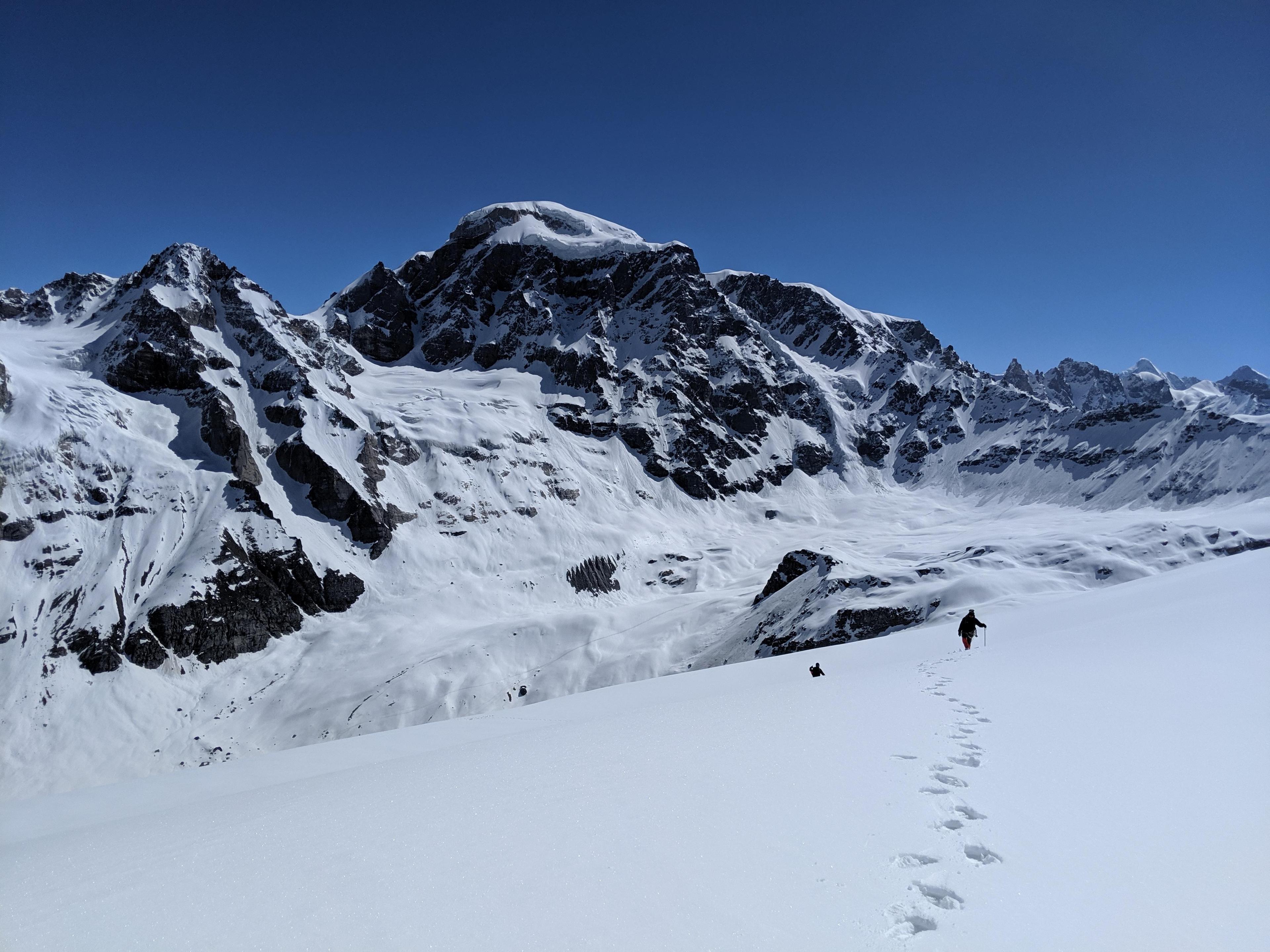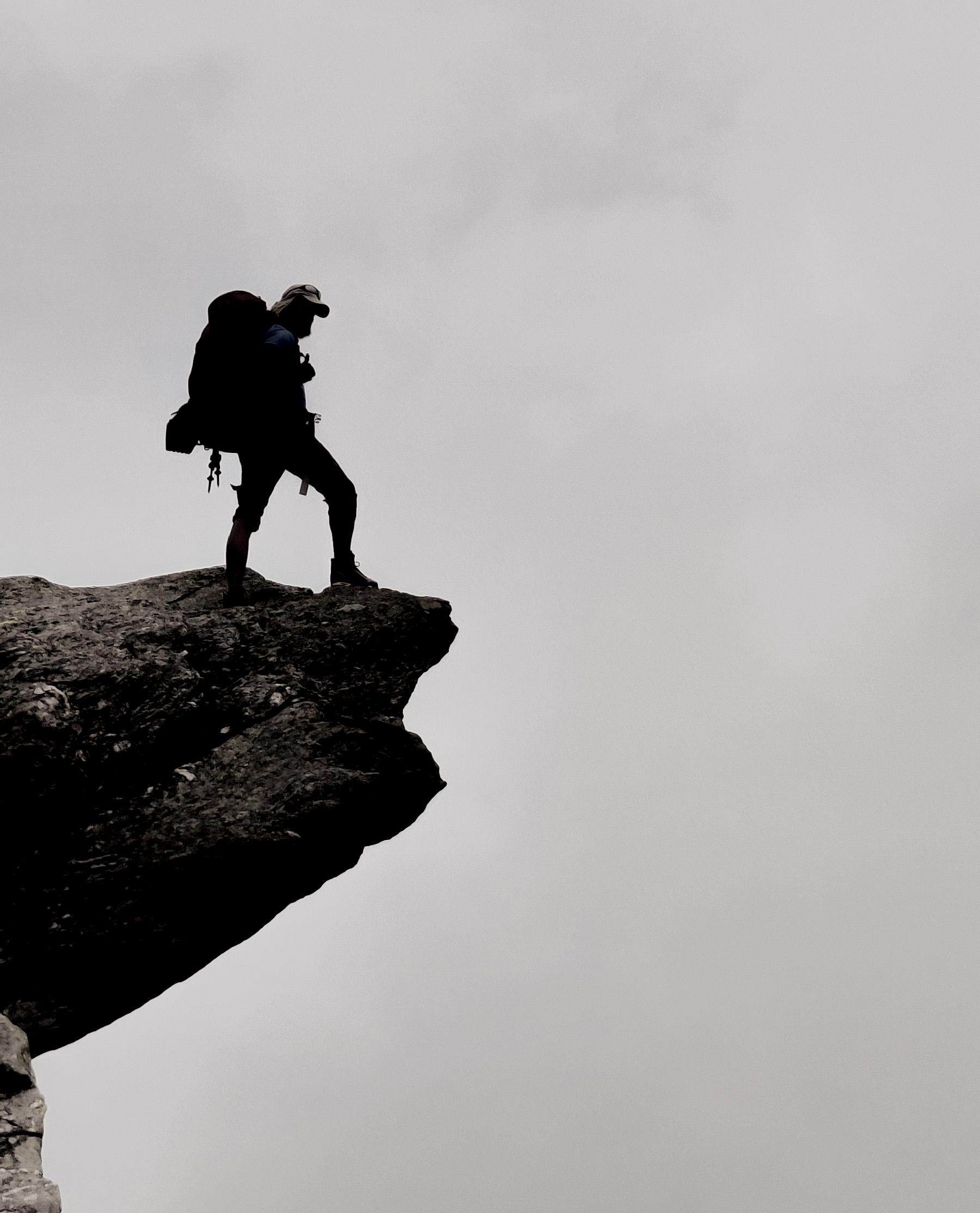
There are treks that take you through beautiful forests. There are treks that lead you to peaceful alpine meadows. And then there are treks that challenge your body, test your determination, and finally reward you with the feeling of standing on top of a Himalayan summit.
The Pangarchulla Peak located in the Garhwal Himalayas of Uttarakhand, Pangarchulla is one of the most exciting summit treks for trekkers looking to experience steep climbs, snow-covered ridges, dense Himalayan forests, dramatic mountain landscapes, and the thrill of climbing above 14,000 feet. The journey begins near Joshimath and gradually takes you from peaceful mountain villages and dense forests to high-altitude meadows and snow-covered summit terrain. At Frontpoint Adventures, we believe that a Himalayan trek is not just about reaching the destination. It is about every step that takes you there—the changing landscapes, the friendships formed on the trail, the difficult climbs, the early morning starts, and the moments when you discover that you are capable of much more than you thought.
Why Is the Pangarchulla Trek So Special?
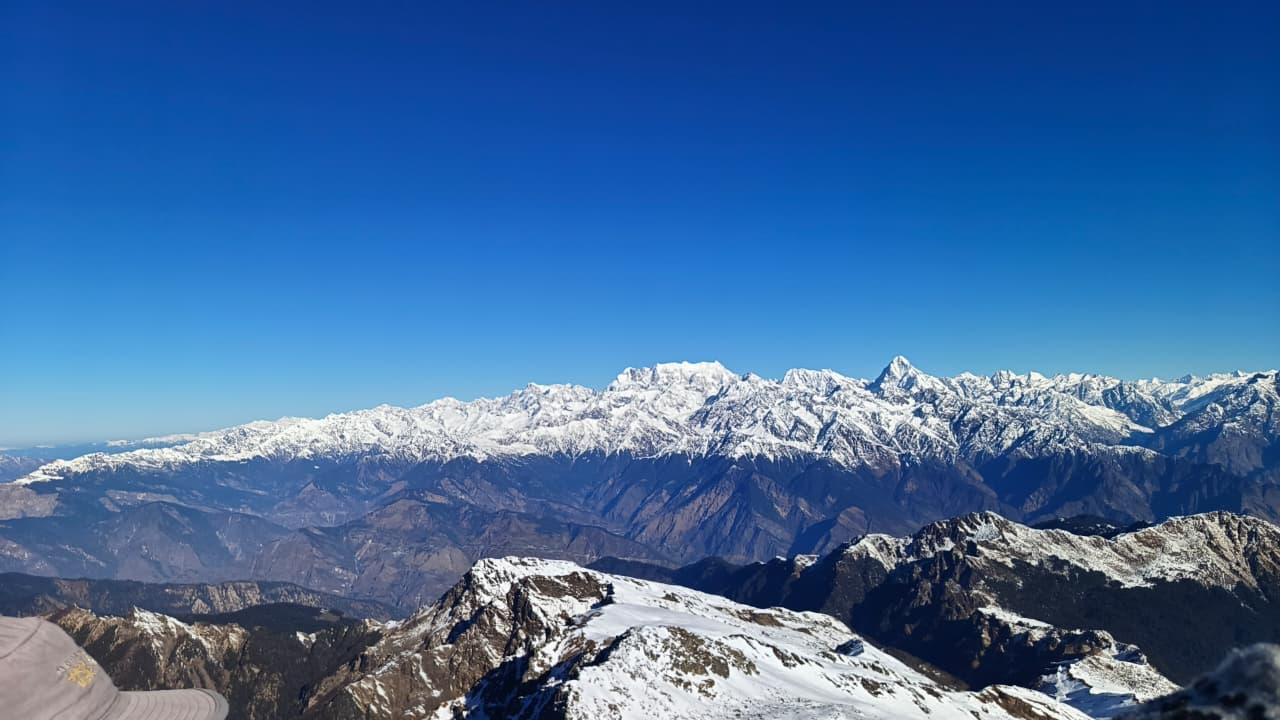
The beauty of Pangarchulla lies in its variety. Within a few days, the trail can take you through: • Traditional Himalayan villages • Dense oak and conifer forests • Beautiful alpine meadows • High-altitude ridges • Snow-covered trails • Steep summit sections • Dramatic mountain landscapes • Panoramic views of some of the most impressive peaks of Uttarakhand From the trail, trekkers can witness spectacular views of peaks such as Mt. Nanda Devi, Chaukhamba, Mt. Neelkanth, Hathi Parbat, Gauri Parbat, and other prominent Himalayan ranges, depending on the weather and visibility. But Pangarchulla is not simply a sightseeing trek. The summit day is demanding. It requires physical fitness, mental strength, proper acclimatization, and the ability to remain calm and focused in changing mountain conditions. That is what makes the summit experience so rewarding.
Day 1: Dehradun/Rishikesh to Joshimath
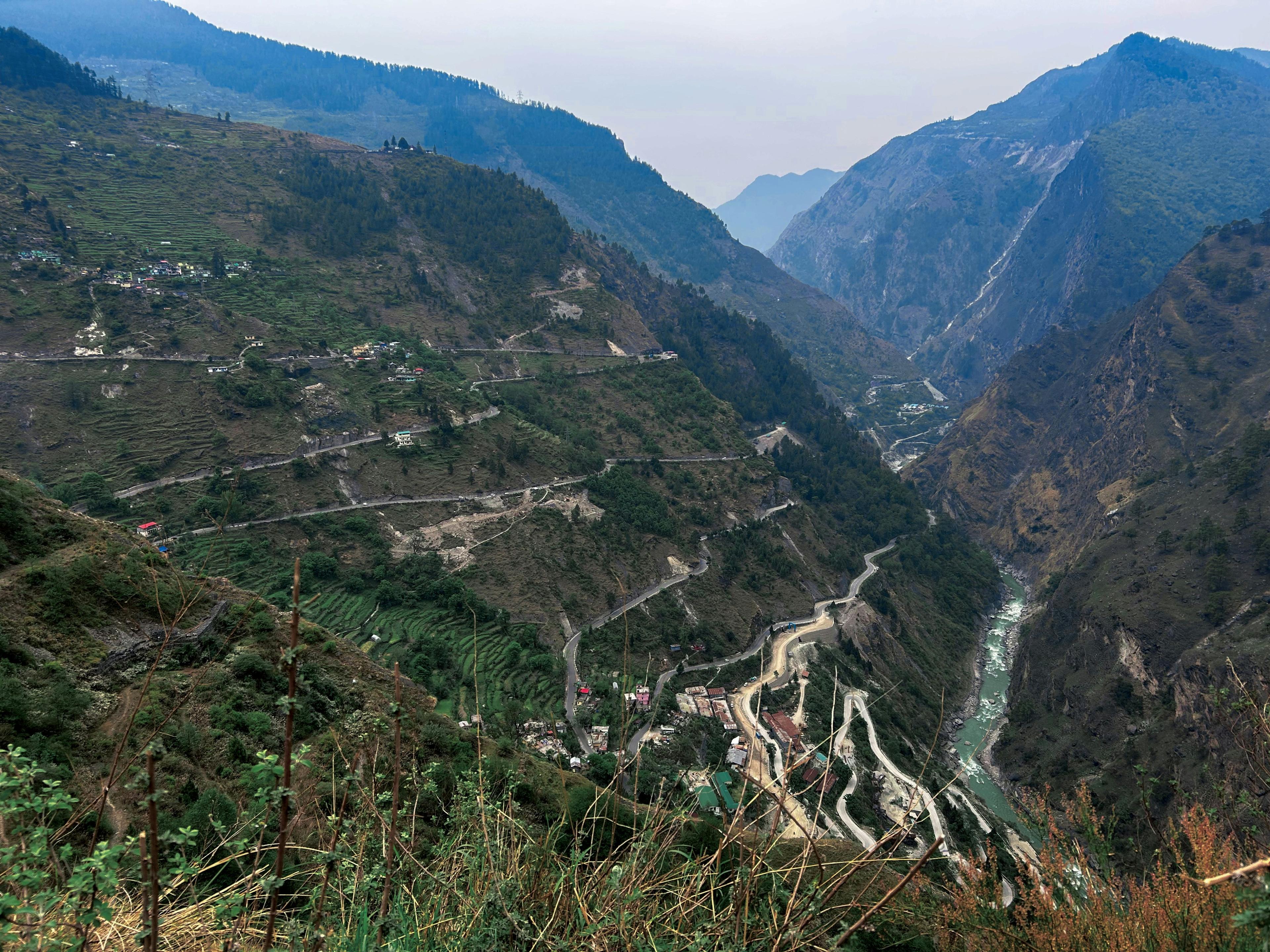
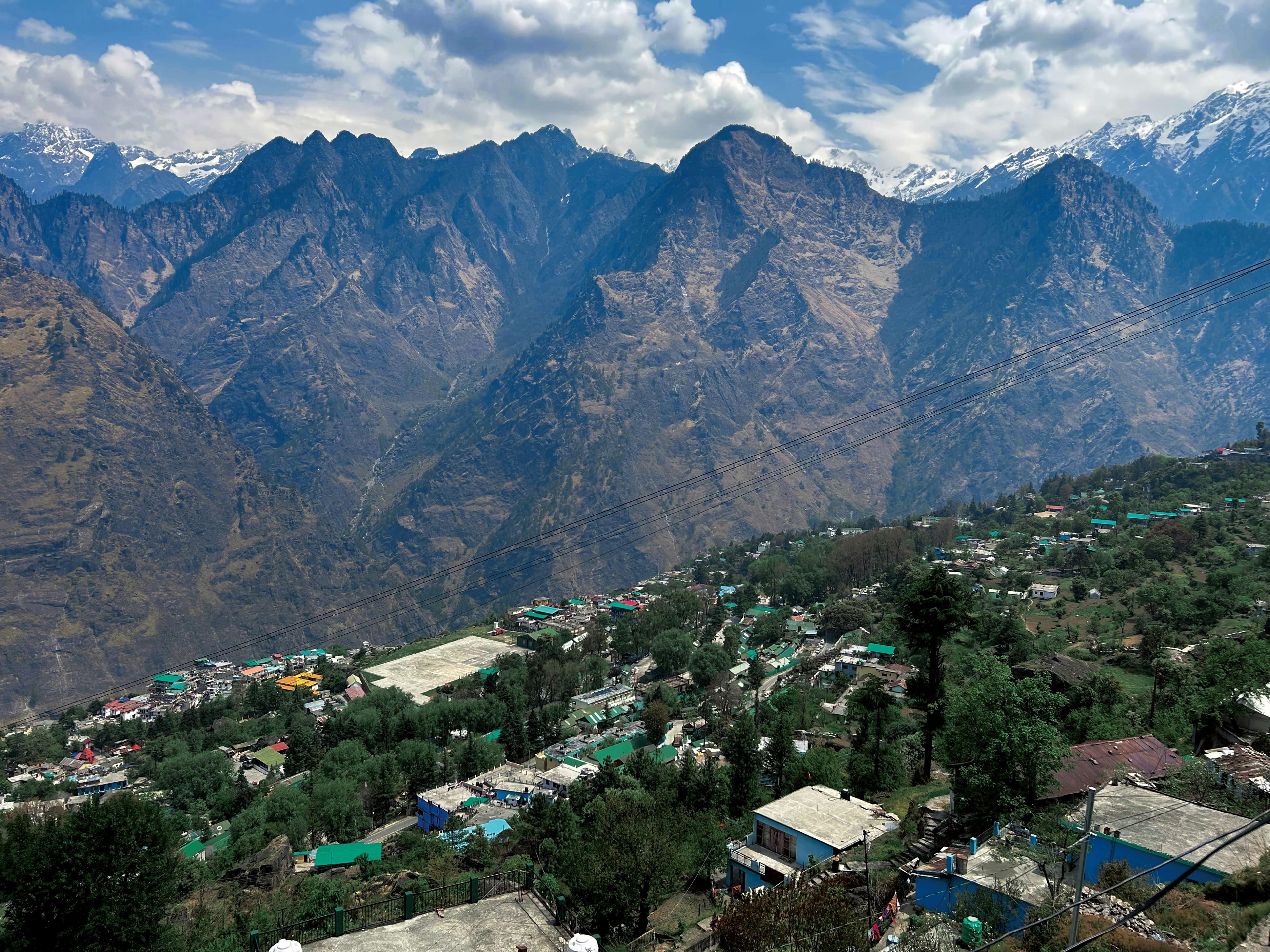
The journey towards Pangarchulla begins from the plains and gradually enters the mountains. The road to Joshimath takes you through the beautiful Garhwal Himalayas, following winding mountain roads and passing through several scenic towns and valleys. As the altitude increases, the landscape begins to change. The busy city environment slowly disappears, replaced by mountain rivers, deep valleys, traditional villages, and towering Himalayan slopes. Joshimath acts as the base for the trek and is an important mountain town in Uttarakhand. After reaching Joshimath, trekkers usually rest, complete the necessary preparations, and get ready for the adventure ahead. The real journey begins the next morning.
Day 2: Joshimath to Dhak Village – Trek to Gulling Top
The trek usually begins from the roadhead near Dhak Village. The first few kilometers introduce trekkers to the character of the Pangarchulla trail. The path gradually climbs through the mountain landscape and passes through traditional villages such as Tugasi and other settlements in the region. The trail begins with a mix of rocky sections, village paths, and gradual ascents. As you move higher, the scenery changes continuously. The dusty mountain trails slowly give way to greener landscapes, forests, and wider views of the surrounding mountains. After several kilometers of trekking, the trail leads towards Gulling Top, the first campsite. At an altitude of approximately 9,600 feet, Gulling Top offers a peaceful setting surrounded by Himalayan landscapes. For many trekkers, this is also the first night of sleeping in tents. After reaching the campsite, the focus is on rest, hydration, and acclimatization. A short walk around the campsite can help the body gradually adjust to the increasing altitude. The first day is not about rushing. It is about settling into the mountains.
Day 3: Gulling Top to Khullara
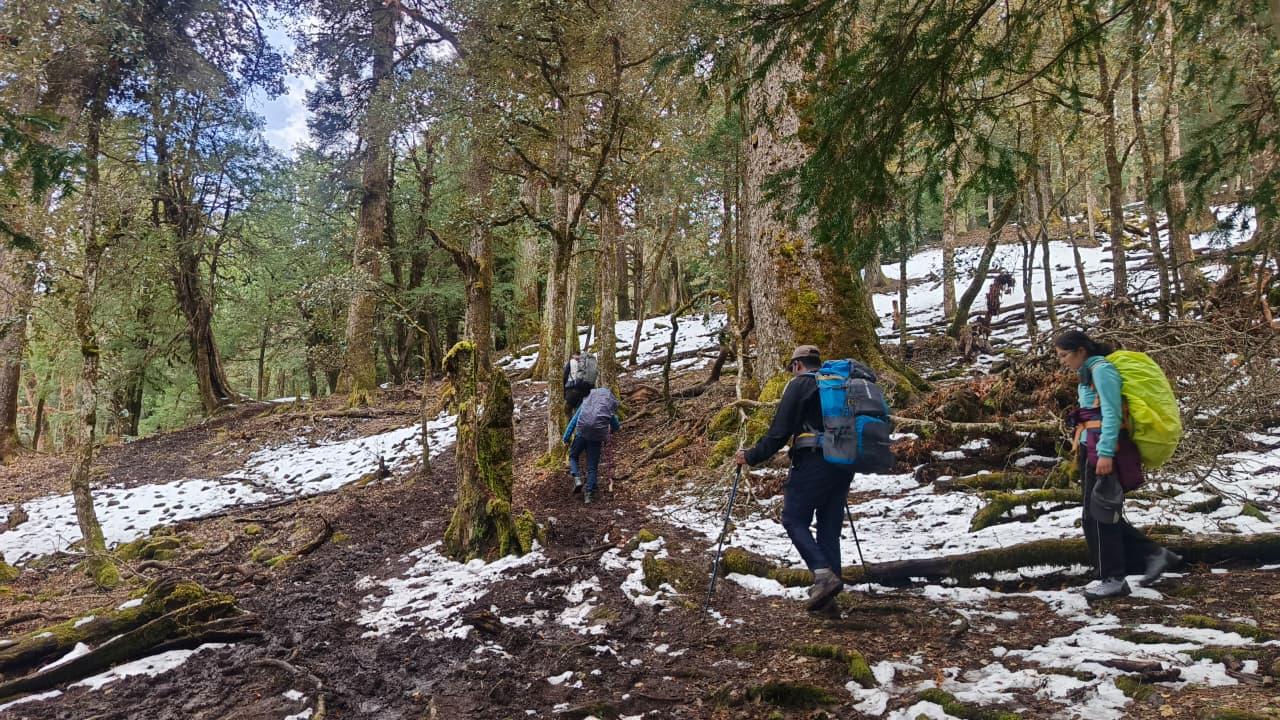
The trail becomes more demanding as the altitude increases. From Gulling Top, the route climbs through beautiful Himalayan forests filled with oak, pine, and other mountain trees. The approximately 6-kilometre trail includes several steep sections and gradual ascents. Along the way, trekkers may come across small streams and beautiful forest clearings. The mountains also begin to appear more dramatically. On a clear day, views of peaks such as Chaukhamba, Neelkanth, Hathi Parbat, and other Himalayan giants create a spectacular backdrop. As the trail continues, the dense forest gradually opens into wide mountain meadows. Eventually, trekkers reach Khullara, situated at approximately 11,000 feet. Khullara is one of the most beautiful campsites on the route. The vast meadows, surrounding forests, and mountain views make it an ideal place to rest and prepare for the higher sections of the trek. By this stage, the altitude begins to make its presence felt. This is why a well-planned trek schedule and proper acclimatization are extremely important.
Day 4: Acclimatization at Khullara and Jhandi Top
High-altitude trekking is not about climbing higher every single day. Sometimes, the smartest thing a trekker can do is remain at the same altitude and allow the body to adapt. The acclimatization day near Khullara is an important part of the Pangarchulla Trek. A short hike towards Jhandi Top provides an opportunity to gain additional altitude and return to the campsite for rest. The landscape changes dramatically above the tree line. The dense forest slowly disappears and is replaced by open grasslands, rocky terrain, mountain flowers, and wide Himalayan views. There are limited water sources in the higher sections, so carrying sufficient water is essential. The terrain may look open and beautiful, but the combination of altitude, wind, and steep sections can make the climb challenging. From the higher points, the surrounding Himalayan peaks appear much closer. The acclimatization day also provides trekkers with an opportunity to prepare mentally for the biggest challenge of the trek—the summit day. After returning to Khullara, an early dinner and proper rest become essential. The next day begins before sunrise.
Day 5: Summit Day – Khullara to Pangarchulla Peak and Back
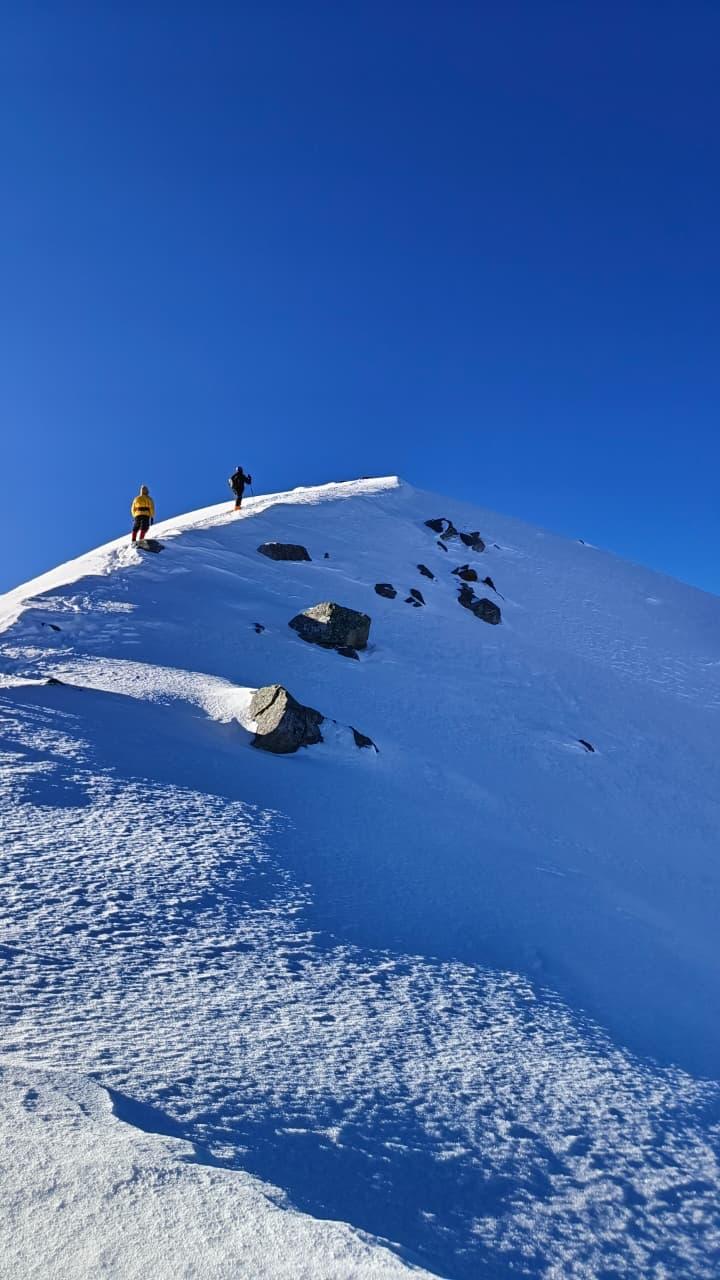
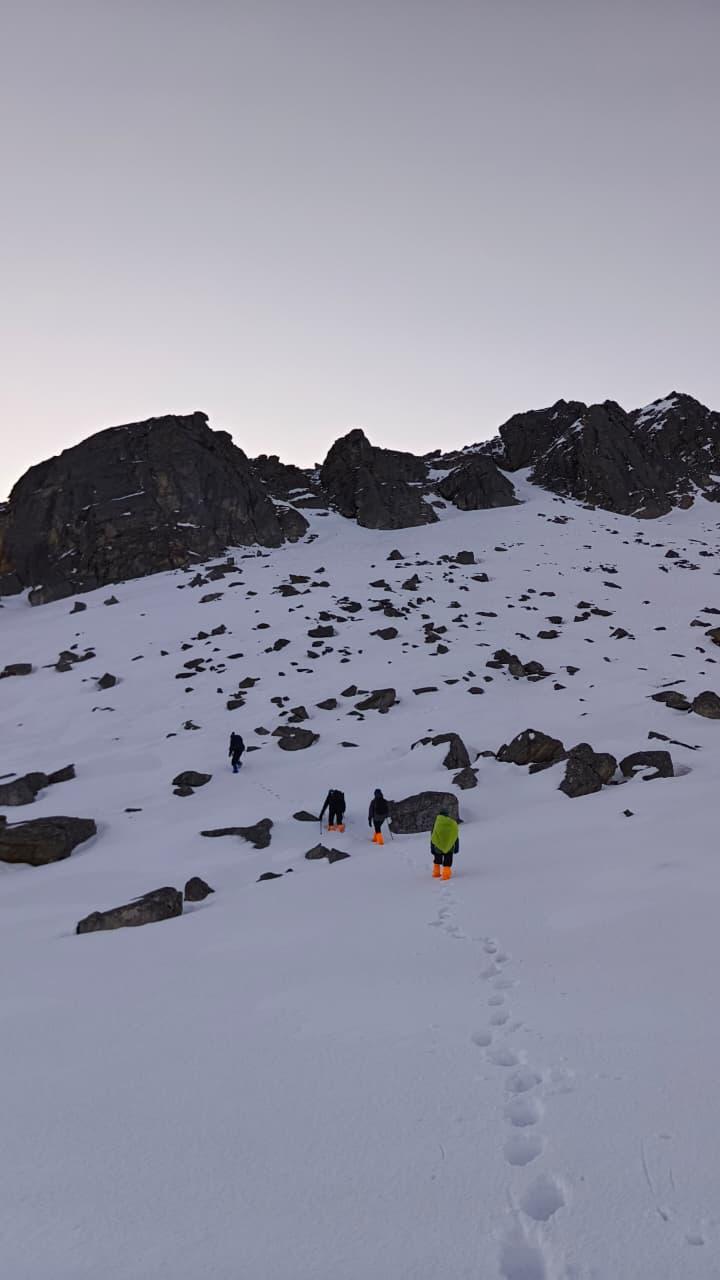
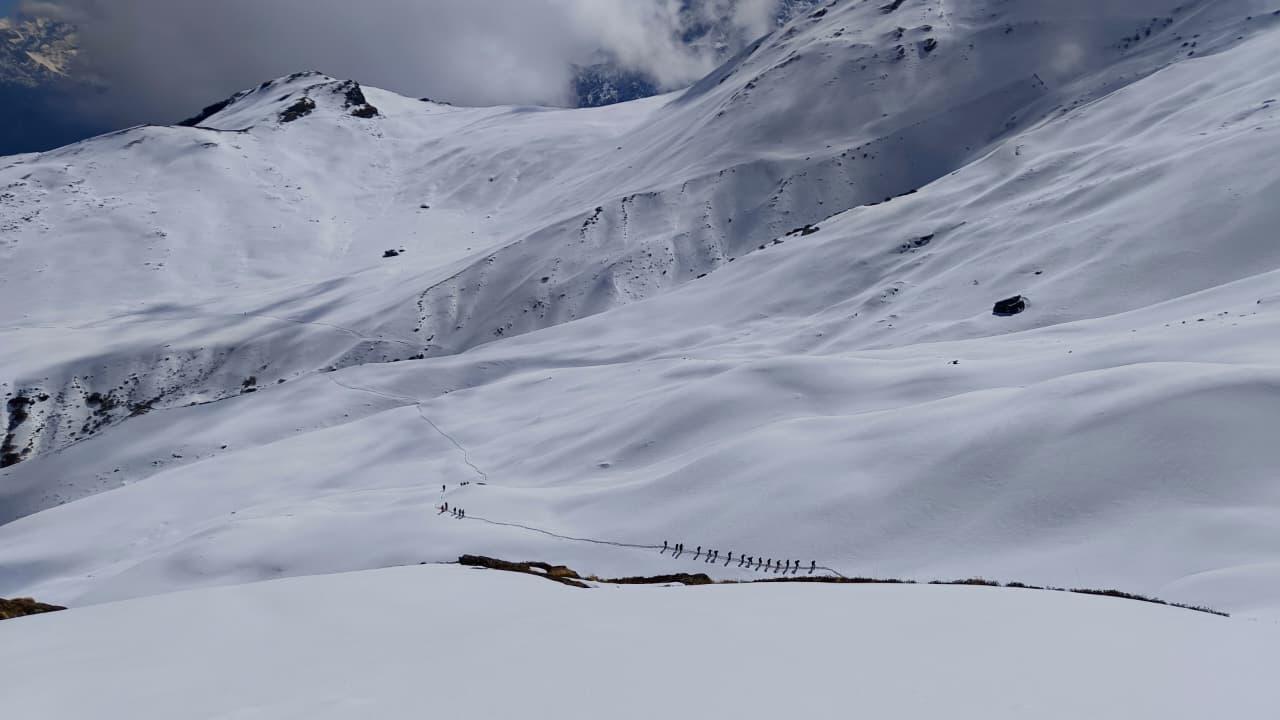
The most challenging and exciting day of the Pangarchulla Trek begins early. Very early. Trekkers generally begin the summit push during the night or in the early hours of the morning. The reason is simple: reaching the summit early improves the chances of experiencing better weather and allows sufficient time for the descent. Under the darkness of the night, the trail is illuminated by headlamps. The cold mountain air, the silence of the Himalayas, and the knowledge that the summit is waiting ahead create an atmosphere that is difficult to describe. The initial climb takes trekkers through steep terrain towards the higher sections of the route. As the sun begins to rise, the mountains slowly reveal themselves. The landscape changes again. The forests and green meadows disappear, giving way to rocky terrain and snow-covered slopes. During the winter and spring seasons, crampons and other technical equipment may be required depending on the snow conditions. The climb becomes progressively steeper. There are narrow ridges, snow-covered sections, exposed terrain, and strong winds. This is the section where physical fitness and mental strength become extremely important. The summit climb is not a race. Every trekker must move at a steady pace, follow the instructions of the trek team, and take appropriate breaks whenever necessary. The final section towards the summit can be particularly demanding. The terrain becomes steeper and the ridge may become narrow. But with every step, the summit gets closer. And then comes the moment every trekker has been waiting for. The Pangarchulla Summit. At approximately 14,700 feet, standing on the summit is an unforgettable experience. On a clear day, the panorama from the top is breathtaking. The Garhwal Himalayas stretch in every direction, creating a magnificent 360-degree mountain landscape. The feeling at the summit is different for every trekker. Some celebrate. Some become emotional. Some simply stand quietly and look at the mountains. But everyone carries the same feeling— They made it. The summit is not just a point on a map. It represents every difficult step, every tired morning, every steep climb, and every moment when the body wanted to stop but the mind continued.
The Descent: The Real Challenge Begins
Reaching the summit is only half the journey. The descent can be equally challenging. Snow conditions may change as the sun rises. The surface can become soft, slippery, or unstable. This is why descending carefully is extremely important. Trekkers must avoid unnecessary risks, especially near narrow ridges and exposed sections. The mountain may look beautiful, but it must always be respected. Depending on weather conditions, the descent may include long stretches over snow, rocky terrain, and steep sections. After a long summit day, reaching the campsite can feel like another achievement in itself. Exhausted, tired, and satisfied, trekkers finally return to Khullara. The body may be tired. But the feeling of having climbed Pangarchulla remains unforgettable.
Day 6: Khullara to Joshimath
After the summit experience, the trail begins to descend. The higher landscapes slowly disappear behind you. The snow-covered terrain gives way to alpine meadows, forests, and eventually the mountain villages. The descent may be easier on the lungs, but long downhill sections can be demanding on the knees and legs. As the trail continues towards the roadhead, trekkers often get opportunities to interact with local villagers and experience the culture and lifestyle of the Himalayan communities. The mountains are not just about peaks and trails. They are also home to people who have lived in these landscapes for generations. By the time trekkers reach Joshimath, the emotions are often mixed. There is happiness after completing the trek. There is satisfaction after achieving the summit. But there is also a strange feeling of leaving the mountains behind.
Day 7: Joshimath to Dehradun/Rishikesh
The final day marks the end of the Pangarchulla adventure. The journey back takes you through the same beautiful mountain roads that brought you into the Himalayas. But the experience is no longer the same. You return as a different person. Perhaps stronger. Perhaps more confident. Perhaps more aware of your own capabilities. A Himalayan summit trek teaches you that mountains are not conquered. They are respected. The summit is simply a place where you discover something about yourself. And long after you return home, a part of you continues to remain in the mountains.
Pangarchulla Peak Trek Difficulty
The Pangarchulla Trek is generally considered a moderate to difficult high-altitude trek. The difficulty comes from a combination of: • High altitude • Long summit day • Steep ascents • Snow conditions • Narrow ridges • Cold temperatures • Strong winds • Long descents The summit day can be particularly demanding. Trekkers should prepare properly before attempting this trek. A good fitness routine should include: • Regular walking or running • Stair climbing • Strength training • Squats and lunges • Core exercises • Cardiovascular training Fitness alone, however, is not enough. The ability to maintain a steady pace and conserve energy is equally important.
Best Time to Do the Pangarchulla Trek
The best season for Pangarchulla depends on the type of experience you are looking for. Winter and Early Spring This period offers the possibility of snow-covered trails and a true winter summit experience. The landscape can be completely transformed into a white Himalayan wonderland. However, snow conditions can make the trek significantly more challenging. Spring Spring brings a beautiful combination of snow and emerging mountain landscapes. The lower sections may begin to show greenery while the higher areas can still hold significant snow. Summer The lower trails become greener and the forest sections are particularly beautiful. Snow conditions at the summit may vary depending on the season and weather. Always remember that mountain weather and snow conditions can change from year to year.
How to Reach Joshimath
Joshimath is well connected by road with major towns in Uttarakhand. Most trekkers travel to Joshimath from Dehradun or Rishikesh. The journey takes several hours by road because of the mountainous terrain. You can reach the region by: • Private vehicle • Shared taxi • Local bus services The road journey itself is scenic and passes through beautiful valleys and mountain landscapes. For a comfortable trekking experience, it is advisable to plan your transportation well in advance.
What Makes Pangarchulla a Must-Do Himalayan Trek?
Pangarchulla is an excellent choice for trekkers who want to experience more than a simple forest trail. It offers a complete Himalayan adventure. You get: ✓ Beautiful mountain villages ✓ Dense Himalayan forests ✓ Alpine meadows ✓ Snow-covered trails ✓ High-altitude trekking ✓ Steep summit climbs ✓ Panoramic Himalayan views ✓ A genuine summit experience. But most importantly, Pangarchulla challenges you. It pushes you outside your comfort zone. It teaches you to walk when you are tired. To continue when the trail becomes steep. To remain calm when the weather changes. And finally, to celebrate when you reach the summit.
Final Thoughts
The Pangarchulla Peak Trek is not an easy walk in the mountains. It is a demanding Himalayan adventure that requires preparation, patience, fitness, and respect for the mountains. But that is exactly what makes it special. The most beautiful memories are often created during the hardest journeys. The early morning starts. The freezing nights. The steep climbs. The laughter inside the tents. The tired legs. The breathtaking views. The summit celebration. And the feeling of returning home with a story that you will remember for the rest of your life.
At Frontpoint Adventures
we believe every trek should be conducted with proper planning, experienced leadership, responsible mountain practices, and a strong focus on trekker safety. Because the goal is not simply to reach the summit. The goal is to experience the journey safely, responsibly, and completely.